October 30: LEMON manuals on a temporary server, it is slow and having issues, download the manuals you need! Later in November we will switch back to the fast server.
Ignition System (1ZZ-FE): Inspection
- SPARK PLUG
NOTE:
- Never use a wire brush for cleaning.
- Never attempt to adjust the electrode gap on used spark plug.
- Spark plug should be replaced every 192,000 km (120,000 miles).
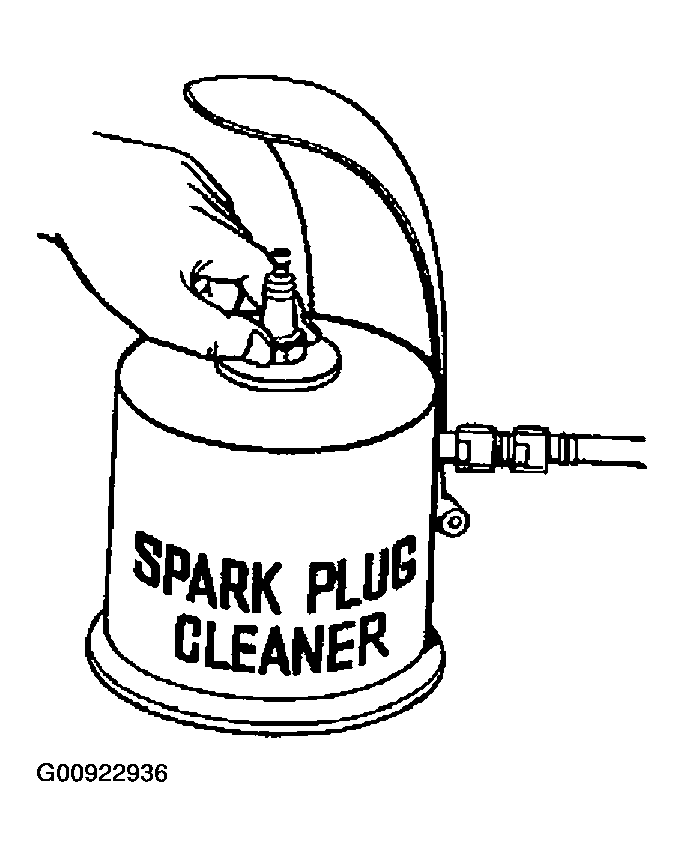
- Clean the spark plugs.
 Courtesy of © TOYOTA, LICENSE AGREEMENT TMS1002
- Air pressure: Below 588 kPa (6.0kg/cm 2
,85psi)
- Duration: 20 seconds or less
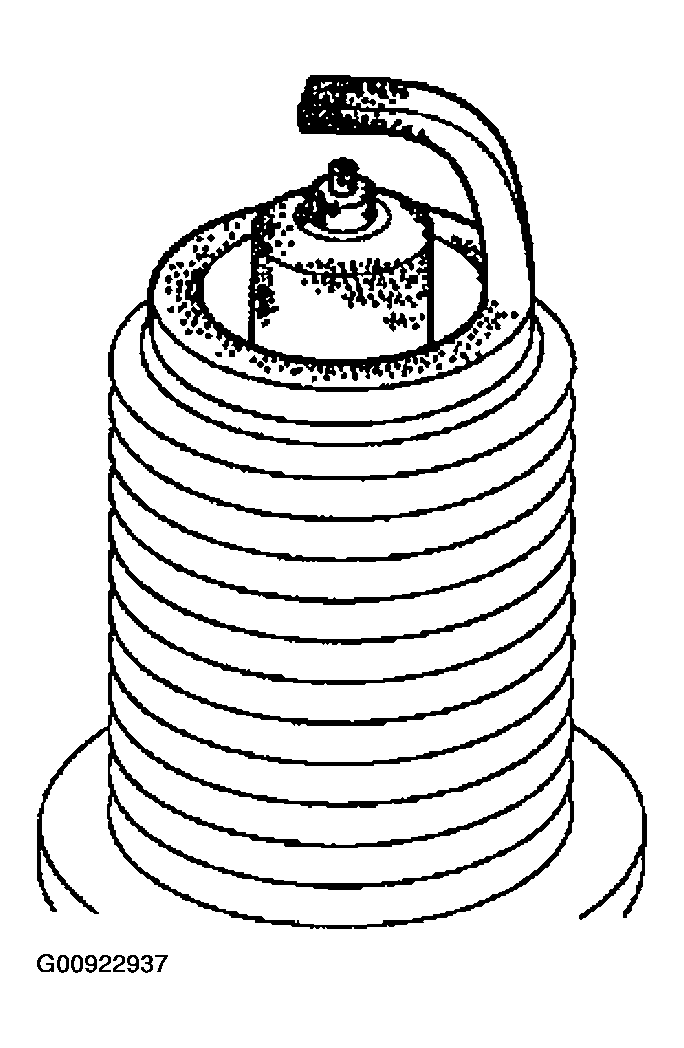
- Check the spark plug for thread damage and insulator damage.
 Courtesy of © TOYOTA, LICENSE AGREEMENT TMS1002
NOTE:
If abnormal, replace the spark plug.
- Recommended spark plug:
- SK 16R11 (DENSO made)
- IFR5A11 (NGK made)
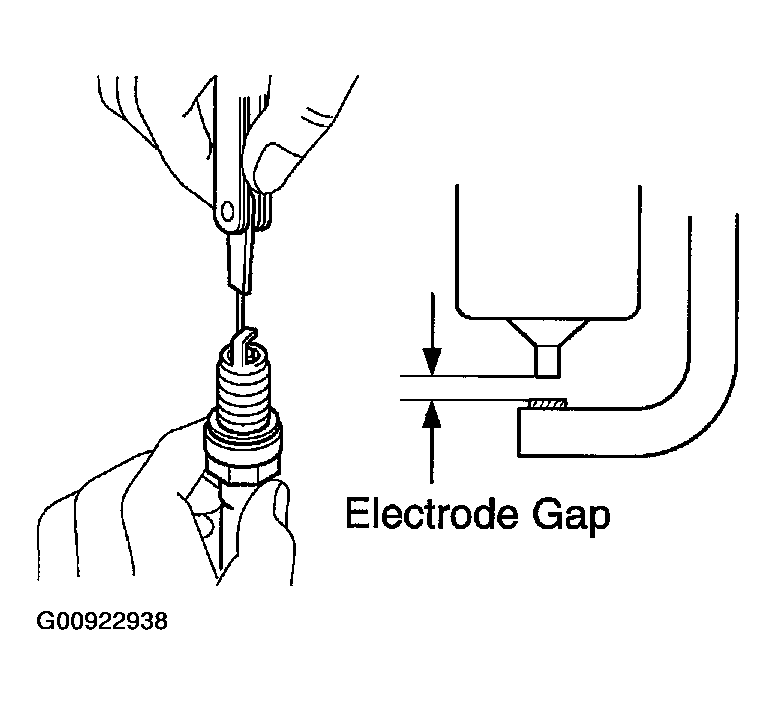
- Check the spark plug electrode gap.
 Courtesy of © TOYOTA, LICENSE AGREEMENT TMS1002
- Electrode gap: 1.1 mm (0.043in.)
- CRANK POSITION SENSOR NO. 1
- Using an ohmmeter, measure the resistance between terminals.
- RESISTANCE:
- At cold: 835 - 1,400 Ω
- At hot: 1,060 - 1,645 Ω
NOTE:
"Cold" and "Hot" on the table express the temperature of the coils themselves. "Cold" is from -10°C (14°F) to 50°C (122°F) and "Hot" is from 50°C (122°F) to 100°C (212°F).
NOTE:
If the resistance is not as specified, replace the crank position sensor No. 1.
- CRANK POSITION SENSOR
- Using an ohmmeter, measure the resistance between terminals.
- RESISTANCE:
- At cold: 1,630 - 2,740 Ω
- At hot: 2,065 - 3,225 Ω
NOTE:
"Cold" and "Hot" on the table express the temperature of the coils themselves. "Cold" is from -10°C (14°F) to 50°C (122°F) and "Hot" is from 50°C (122°F) to 100°C (212°F).
NOTE:
If the resistance is not as specified, replace the crank position sensor.
- IGNITION RELAY
 Courtesy of © TOYOTA, LICENSE AGREEMENT TMS1002
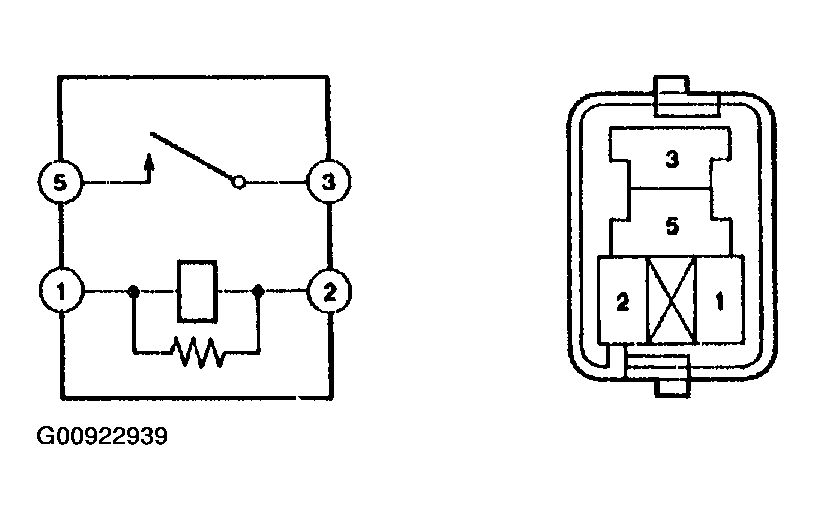
- Continuity inspection.
- Using an ohmmeter, check that continuity exists between each terminal.
- Specified condition:
- Between terminal 1 and 2: Continuity
- Between terminal 3 and 5: No continuity
- Using an ohmmeter, check that continuity exists between terminals 3 and 5 when the battery voltage is applied across terminals 1 and 2.