Evaporative Emissions System: Testing and Inspection
EVAP Leak CheckCAUTION:
- Never use compressed air or a high pressure pump.
- Never exceed 4.12 kPa (0.042 kg/cm2, 0.6 psi) of pressure in EVAP system.
NOTE:
- Never start engine.
- Improper installation of EVAP service port adapter to the EVAP service port may cause a leak.
With SDT
1. Attach the EVAP service port adapter securely to the EVAP service port.
2. Also attach the pressure pump and hose to the EVAP service port adapter.
3. Turn ignition switch ON.
4. Select the "EVAP SYSTEM CLOSE" of "Utility" mode with SDT.
5. Touch "START". A bar graph (Pressure indicating display) will appear on the screen.
6. Apply positive pressure to the EVAP system until the pressure indicator reaches the middle of the bar graph.
7. Remove EVAP service port adapter and hose with pressure pump.
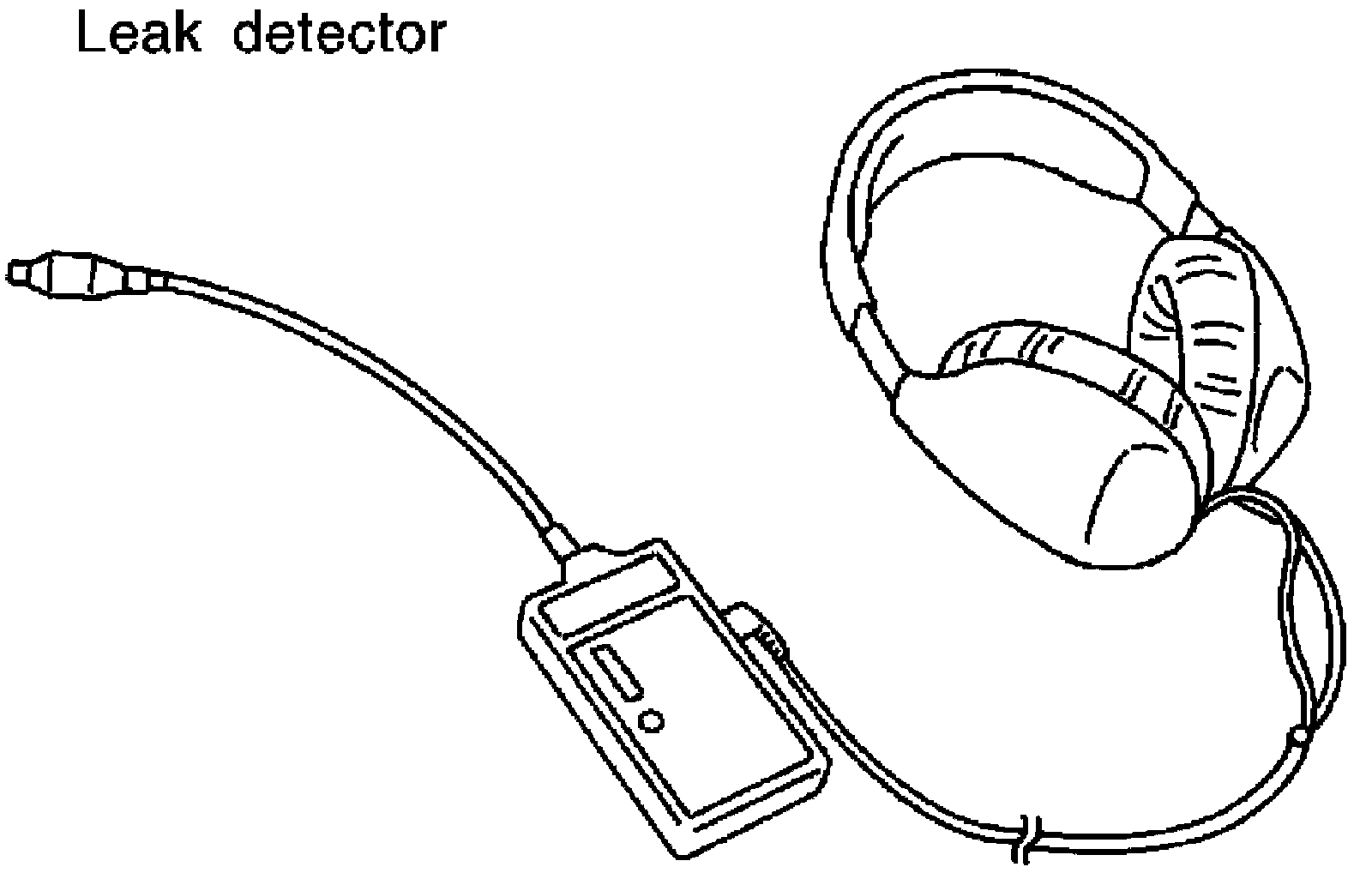
8. Locate the leak using a leak detector. Refer to [Evaporative Emission System: Description].
Without SDT
1. Attach the EVAP service port adapter securely to the EVAP service port.
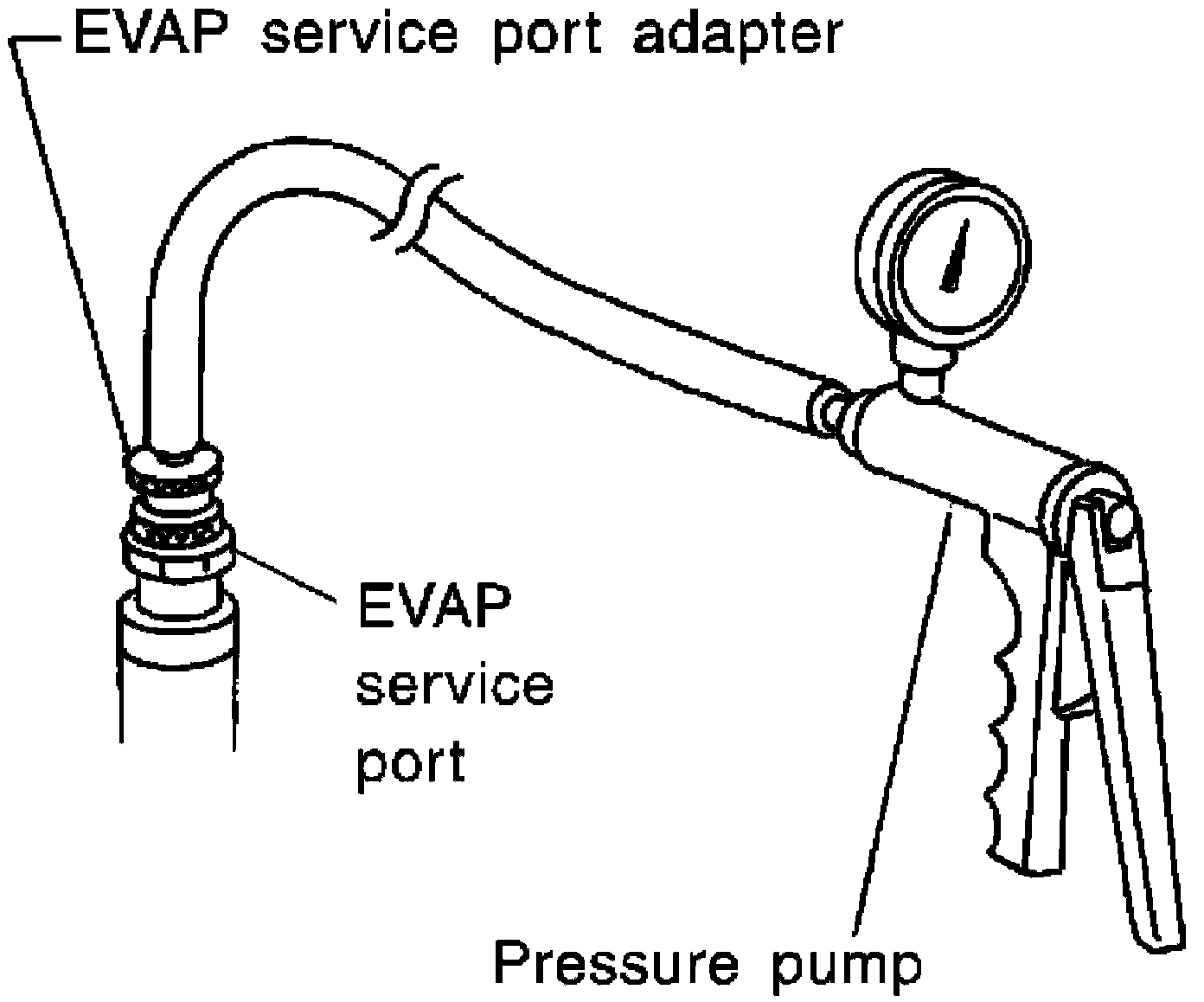
2. Also attach the pressure pump with pressure gauge to the EVAP service port adapter.
3. Apply battery voltage between the terminals of EVAP canister vent control valve (3) to make a closed EVAP system.
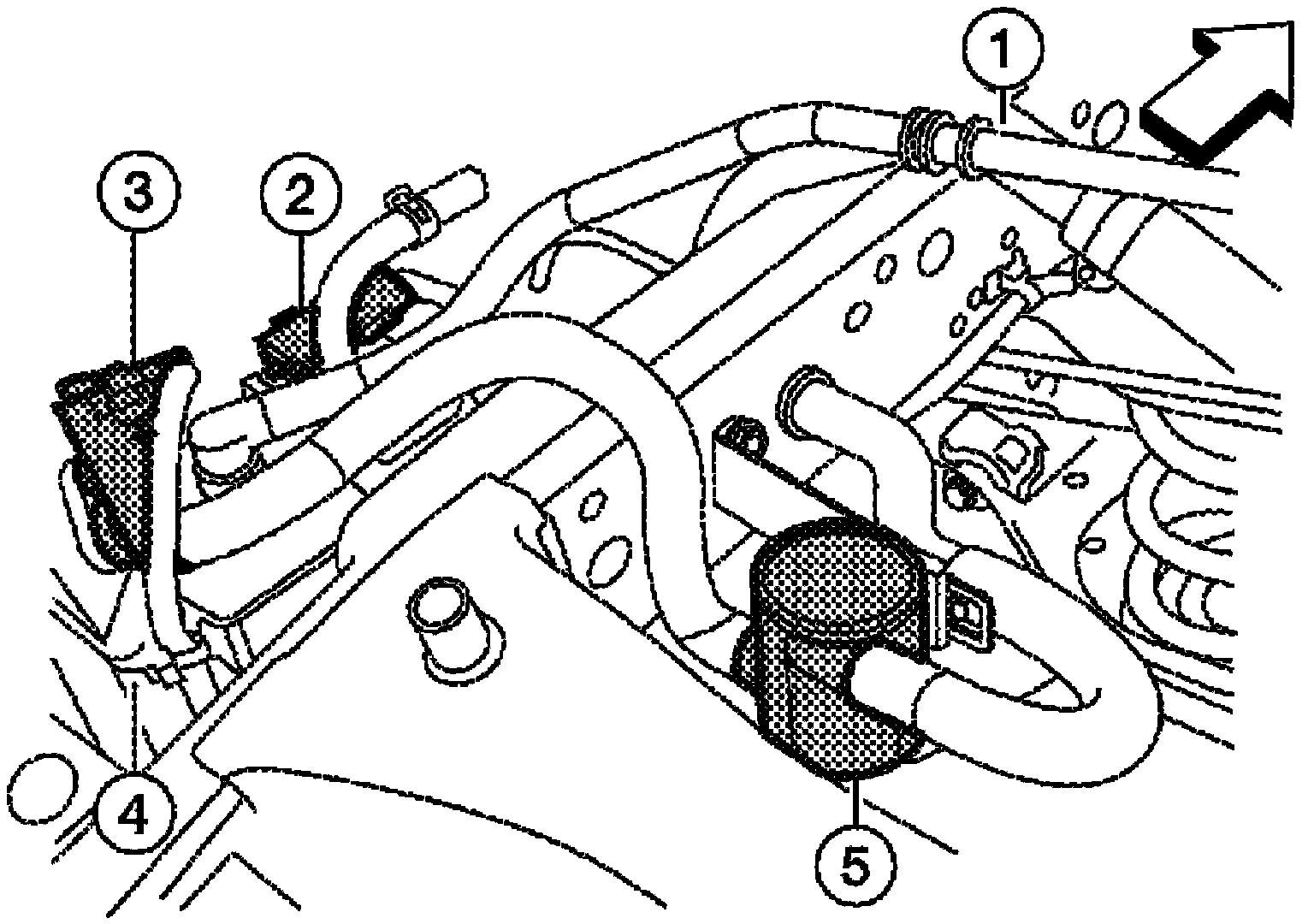
- Fuel filler pipe (top of frame view) (1).
- EVAP control system pressure sensor (2).
- EVAP canister (4).
- Drain filter (5).
- White arrow indicates Vehicle front.
4. To locate the leak, deliver positive pressure to the EVAP system until pressure gauge points reach 1.38 to 2.76 kPa (0.014 to 0.028 kg/cm2, 0.2 to 0.4 psi).
5. Remove EVAP service port adapter and hose with pressure pump.
6. Locate the leak using a leak detector. Refer to [Evaporative Emission System: Description].