Connecting Rod Bearing: Service and Repair
Crank Pins and Connecting Rod Bearings InspectionReference: Pistons, Piston Rings, Connecting Rods and Cylinders Removal and Installation
Reference: Pistons, Piston Rings, Connecting Rods and Cylinders Disassembly and Reassembly
^ Inspect crank pin for uneven wear or damage. Measure crank pin for out-of-round or taper with a micrometer. If crank pin is damaged, or out-of-round or taper is out of limit, replace crankshaft or regrind crank pin then inspect rod bearing clearance, referring to "Connecting rod bearing clearance".
Crank pin diameter:
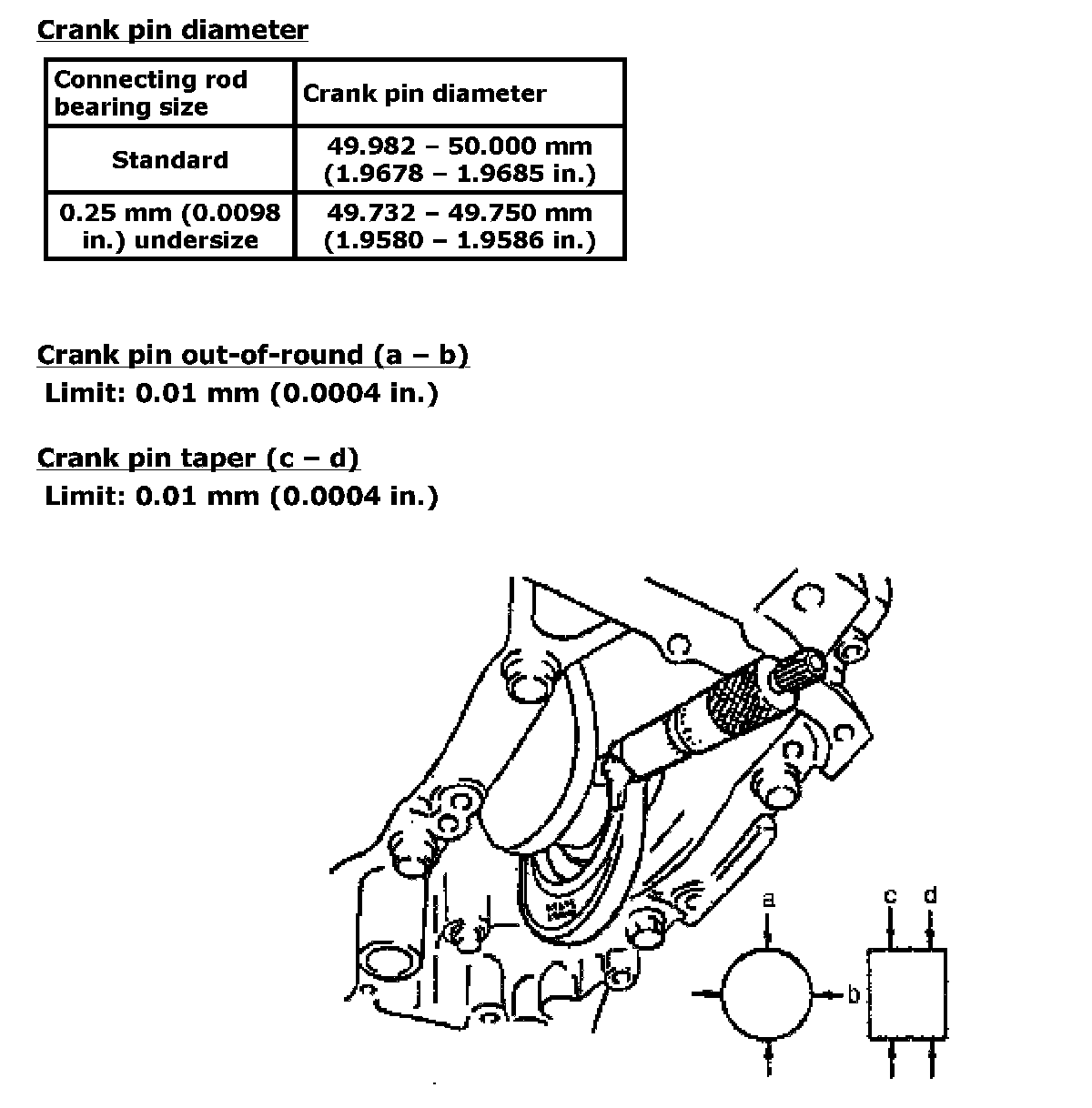
^ Connecting rod bearing general information:
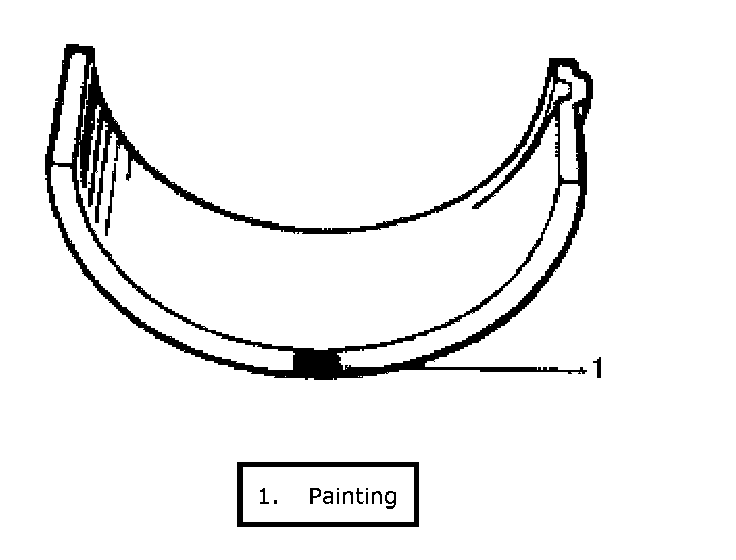
Service connecting rod bearings are available in standard size and 0.25 mm (0.0098 inch) undersize, and standard size bearing has 5 kinds of bearings differing in tolerance. For identification of undersize bearing, it is painted red at the position as indicated in figure, undersize bearing thickness is 1.605 - 1.615 mm (0.0632 - 0.0635 inch) at the center of it.
^ Connecting rod bearing visual inspection:
Inspect bearing shells for signs of fusion, pitting, burn or flaking and observe contact pattern.
Bearing shells found in defective condition must be replaced.
^ Connecting rod bearing clearance:
a. Before checking bearing clearance, clean bearing and crank pin.
b. Install bearing in connecting rod and bearing cap.
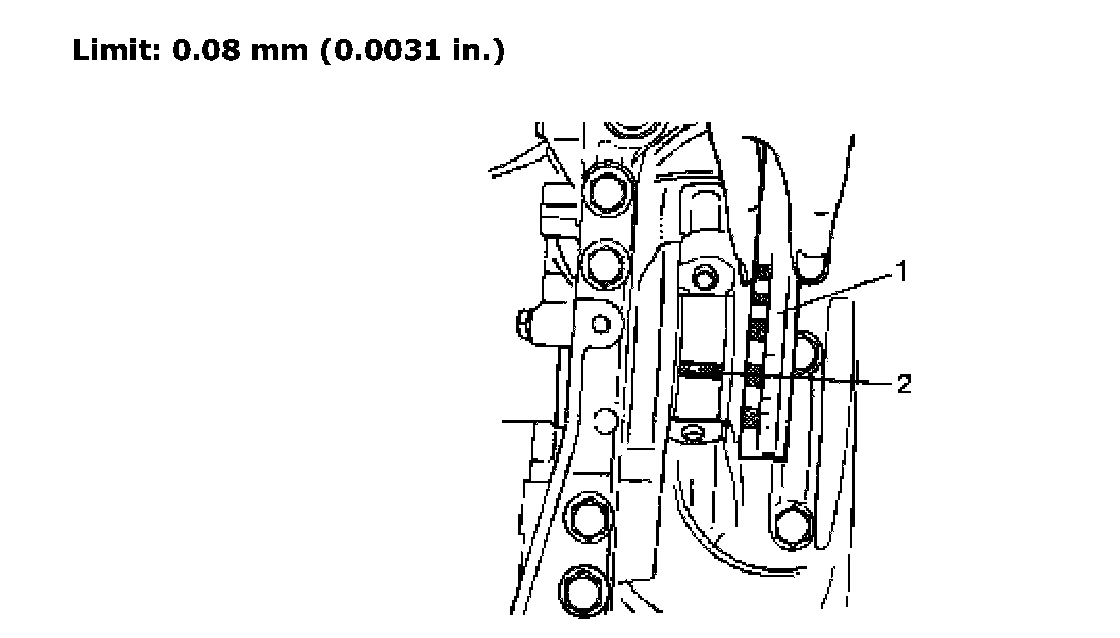
c. Place a piece of gaging plastic (1) to full width of crank pin as contacted by bearing (parallel to crankshaft), avoiding oil hole.
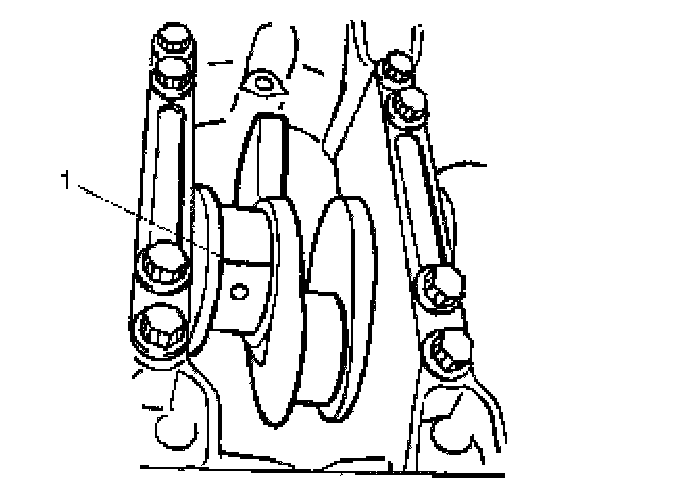
d. Install rod bearing cap to connecting rod, referring to Pistons, Piston Rings, Connecting Rods and Cylinders Removal and Installation.
NOTE: Do not turn crankshaft with gaging plastic installed.
e. Remove cap and using a scale (2) on gaging plastic (1) envelope, measure gaging plastic (1) width at the widest point (clearance).
If clearance exceeds its limit, use a new standard size bearing, referring to "Selection of Connecting Rod Bearings" in this section.
After selecting new bearing, recheck clearance.
Bearing clearance
Standard: 0.045 - 0.063 mm (0.0018 - 0.0024 inch)
f. If clearance can not be brought to within its limit even by using a new standard size bearing, regrind crankpin to undersize and use 0.25 mm undersize bearing as follows.
i. Install 0.25 mm undersize bearing to connecting rod big end.
ii. Measure bore diameter of connecting rod big end.
iii. Regrind crank pin to the following finished diameter.
Finished crank pin diameter = Measured big end bore diameter (including undersize bearing) - 0.054 mm (0.0021 inch)
iv. Confirm that bearing clearance is within standard value described at step e).
^ Selection of connecting rod bearings:
NOTE:
^ If bearing is in malcondition, or bearing clearance is out of specification, select a new standard bearing according to the following procedure and install it.
^ When replacing crankshaft or connecting rod and its bearing due to any reason, select new standard bearings to be installed, by referring to numbers stamped on connecting rod and its cap and/or alphabets stamped on crank web No.3.
a. Check stamped numbers on connecting rod and its cap as shown.
Three kinds of numbers ("1", "2" and "3") represent the following connecting rod big end inside diameters.
For example, stamped number "1" indicates that corresponding connecting rod big end inside diameter is 53.0000 - 53.0060 mm (2.0867 - 2.0868 inch).
Connecting rod big end inside diameter 1:
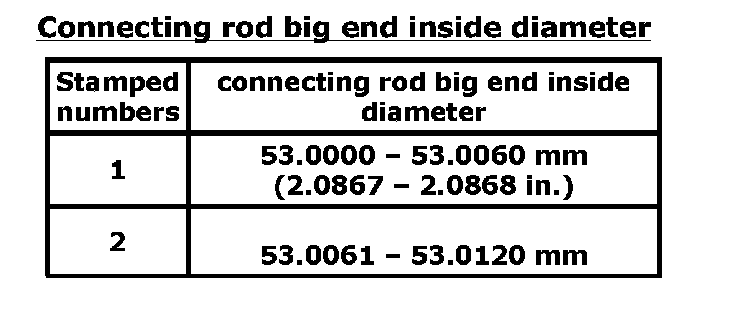
Connecting rod big end inside diameter 2:
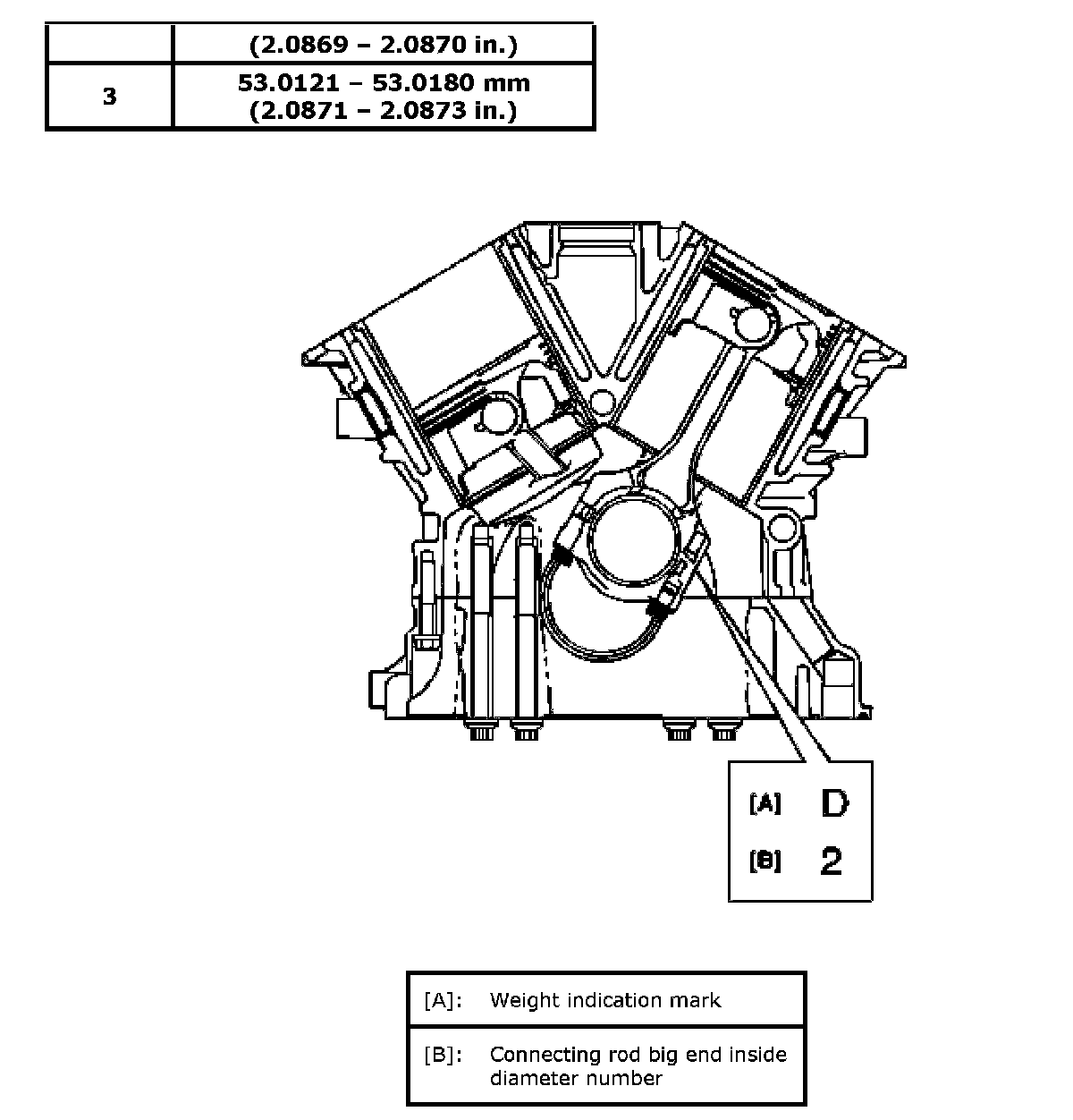
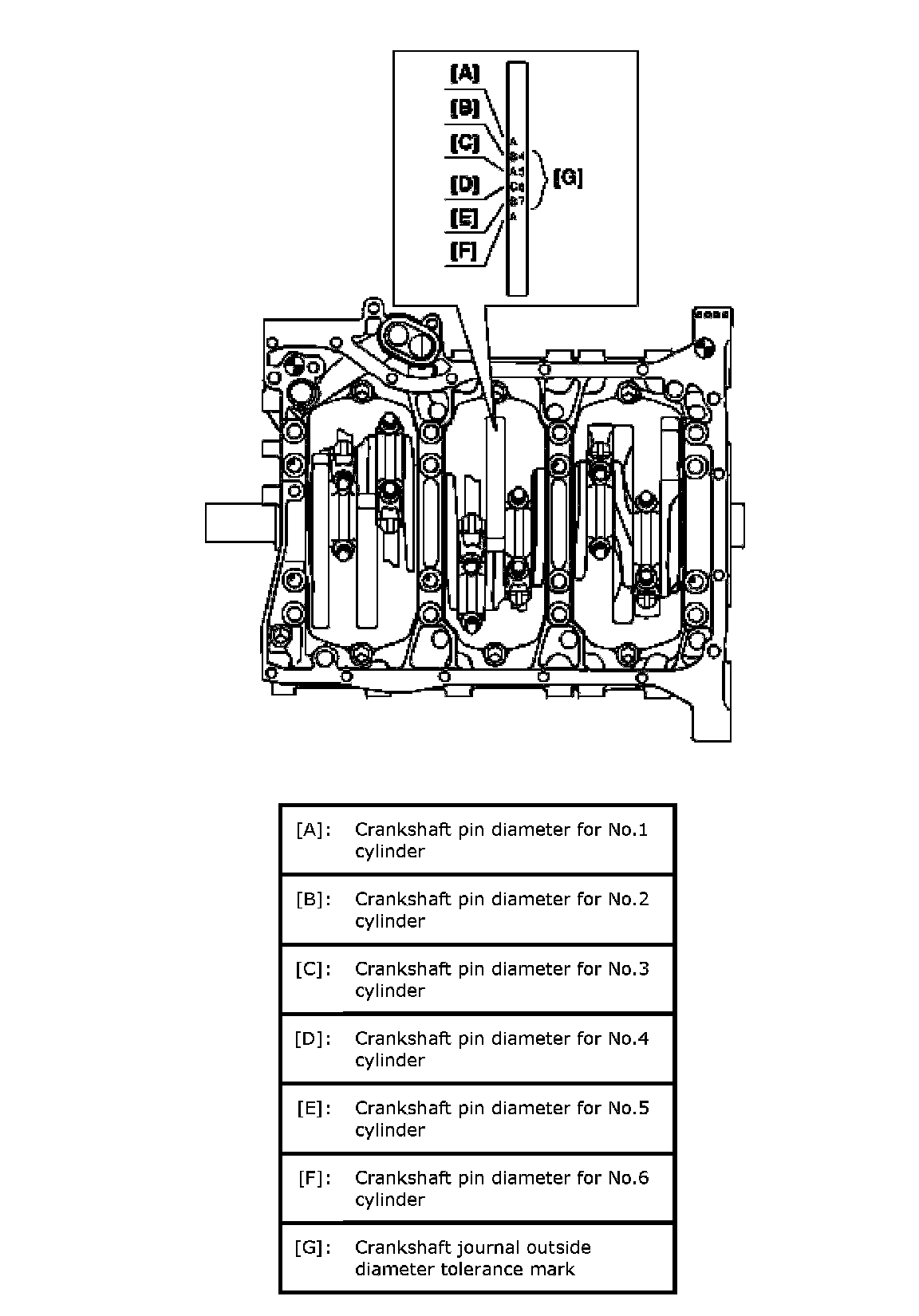
b. Next, check crankshaft pin diameter. On crank web No.3, six alphabets are stamped as shown in figure.
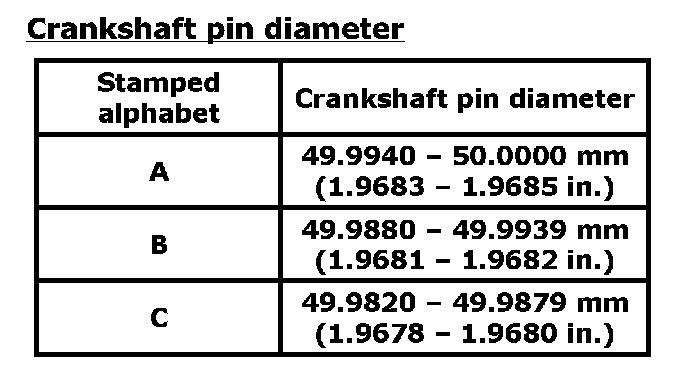
Three kinds of alphabet ("A", "B" and "C") represent the following crankshaft pin diameter respectively.
For example, stamped "A" indicates that corresponding crankshaft pin diameter is 49.9940 - 50.0000 mm (1.9683 - 1.9685 inch).
Crankshaft pin diameter:
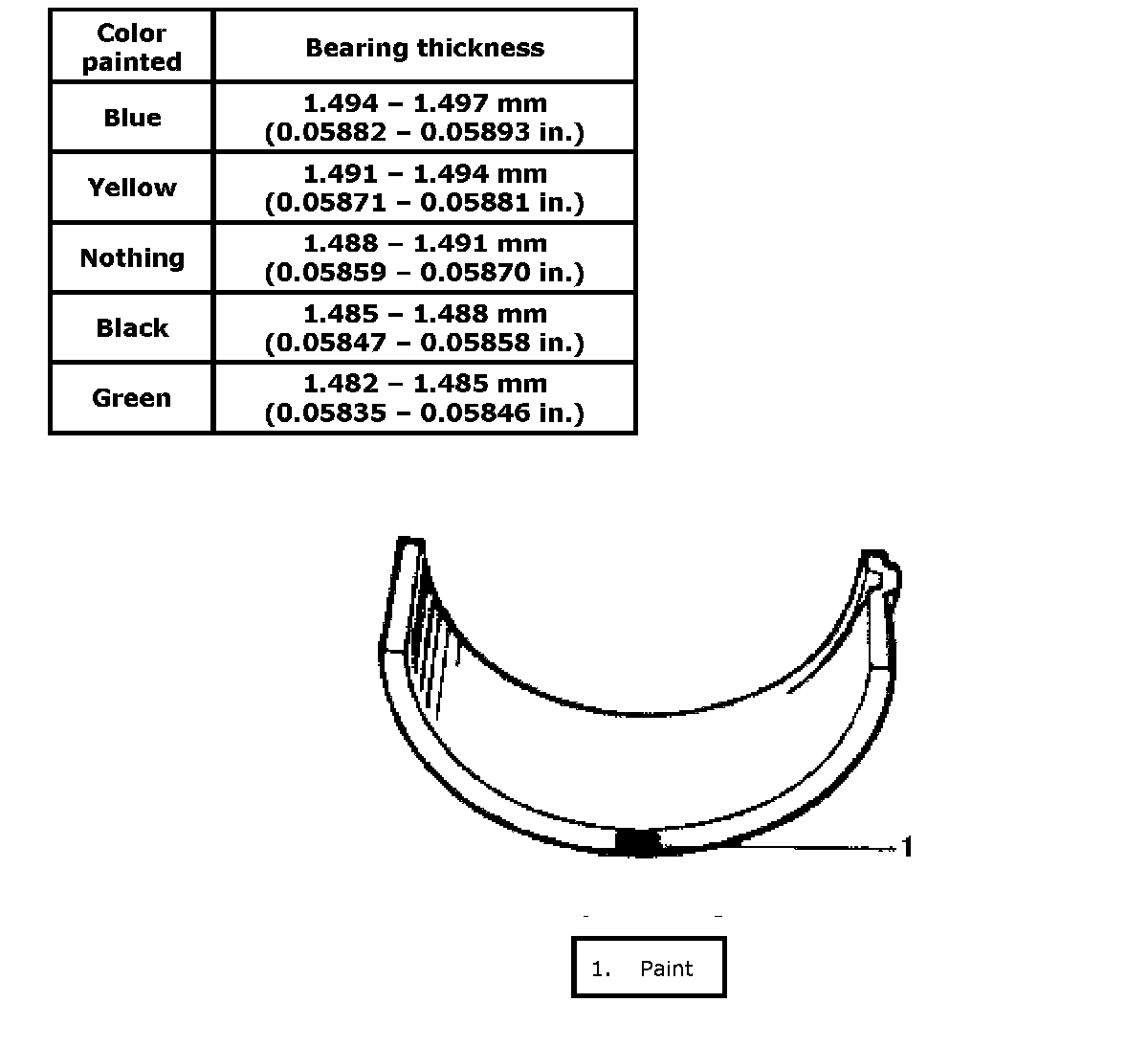
c. There are five kinds of standard bearings differing in thickness. To distinguish them, they are painted in the following colors at the position as indicated in figure.
Each color indicated the following thickness at the center of bearing.
Standard size of connecting rod bearing thickness:
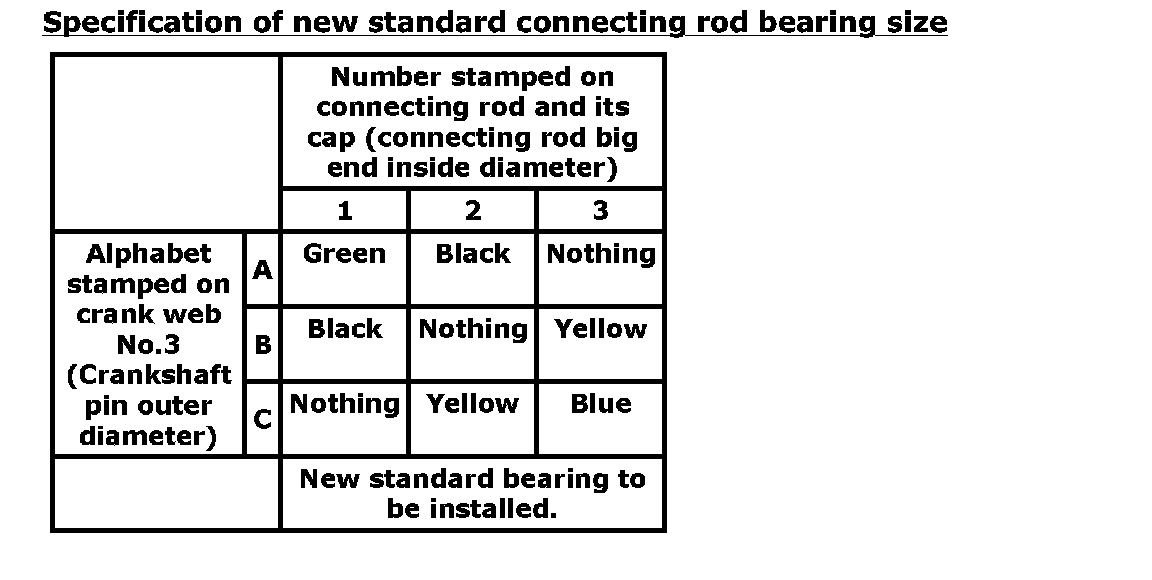
d. From number stamped on connecting rod and its cap and alphabets stamped on crank web No.3, determine new standard bearing to be installed to connecting rod big end inside, by referring to table.
For example, if number stamped on connecting rod and its cap is "1" and alphabet stamped on crank web No.3 is "B", install a new standard bearing painted in "Black" to its connecting rod big end inside.
Specification of new standard connecting rod bearing size:
e. Check bearing clearance with newly selected standard bearing, referring to "Selection of Connecting Rod Bearing" in this section.
If clearance still exceeds its limit, use next thicker bearing and recheck clearance.
^ Selection of connecting rod bearings:
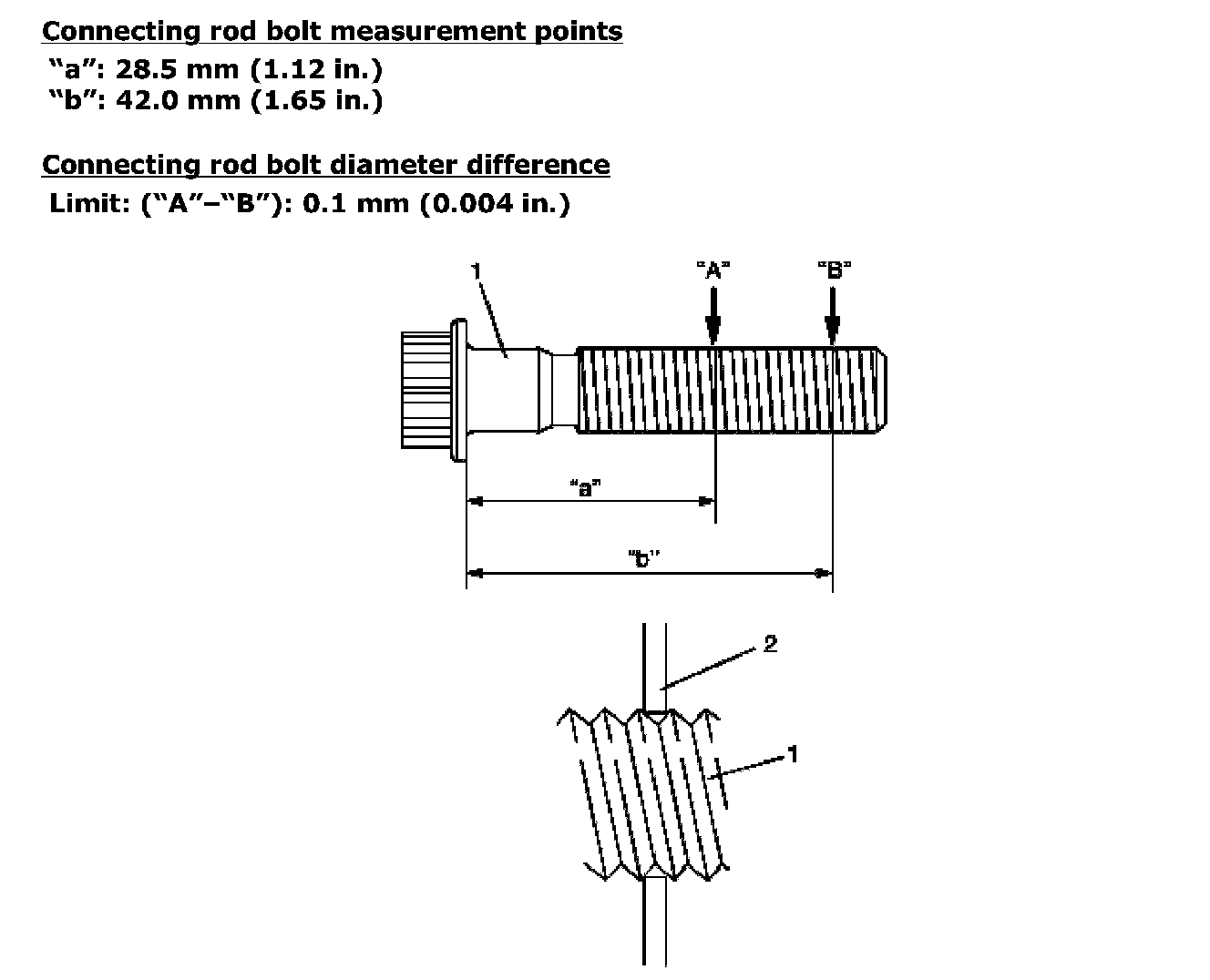
Measured each thread diameter of connecting rod bolts (1) at specified measurement points "A" and "B" by using a micrometer (2).
Calculate difference in diameters ("A" - "B"). If it exceeds limit, replace connecting rod.