Electronic Stability Program (ESP)
Electronic Stability Program DescriptionElectronic Stability Program ESP(R) main function is to control ABS / EBD, TCS and stability.
^ ABS / EBD
ABS function is that four wheel brake forces are independently varied with referring each wheel slip condition.
EBD function is that front and rear wheel braking forces are varied with referring loading distribution of the vehicle.
ABS improves the vehicle stability, controllability and braking performance.
For the details, refer to ABS Description.
^ TCS (Traction Control System)
TCS function is that engine torque is controlled and brake is applied with referring wheel spin condition during vehicle starting and accelerating.
^ Stability control system
Stability control system is that engine torque is controlled and brake is applied with referring vehicle condition (over steering, under steering) during cornering.
ESP(R) is a registered trademark of Daimler Chrysler AG.
ESP(R) Hydraulic Unit / Control Module Assembly Description
ESP(R) control module is a component of ESP(R) hydraulic unit / control module assembly and has the following functions.
Self-Diagnosis Function
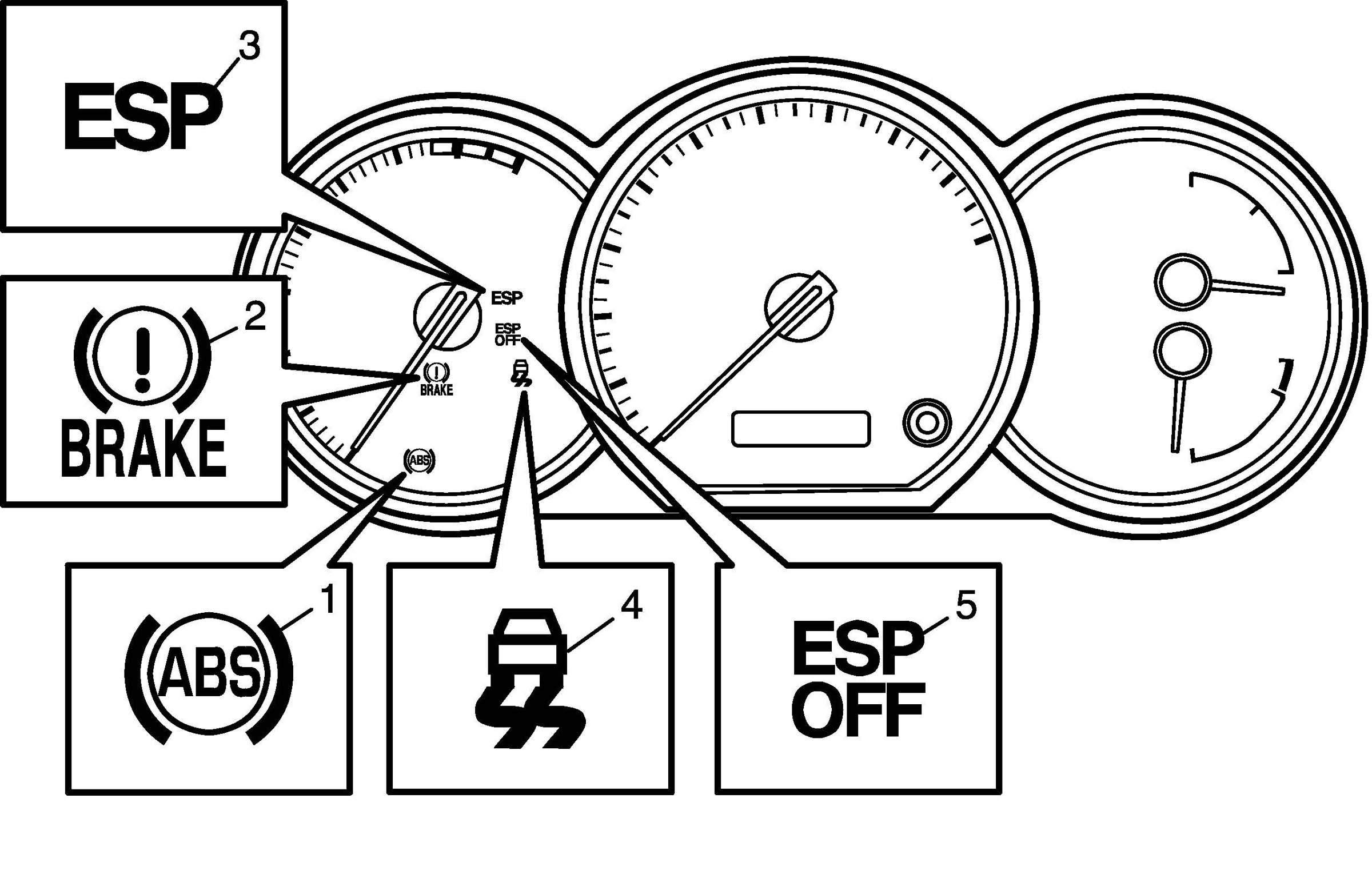
ESP(R) control module monitors each input and output signals. When ESP(R) control module detects any malfunction, some of ABS warning light (1), EBD warning light (brake warning light) (2), ESP(R) warning light (3), SLIP indicator light (4), ESP(R) OFF light (5) are turned ON and indicate the abnormality to driver.
^ When ignition switch is turned ON, ABS warning light, EBD warning light, ESP(R) warning light, SLIP indicator light and ESP(R) OFF light light for 2 seconds to check its circuit.
^ When no abnormality is detected (the system is in good condition), ABS warning light, EBD warning light, ESP(R) warning light, SLIP indicator light and ESP(R) OFF light turn OFF after 2 seconds.
^ When an abnormality in the system is detected, some of ABS warning light, EBD warning light (brake warning light), ESP(R) warning light, SLIP indicator light and/or ESP(R) OFF light are turned ON and the area where that abnormality lies is stored in the memory in ESP(R) control module.
Fail-Safe Mode
When ESP(R) control module detects abnormality, the system goes into fail-safe mode. And some of functions of ABS, TCS, stability control system are shut down. For details of fail safe mode, refer to Fail-Safe Table.
Warning Light Indicator Light Description
There are five types of warning light and indicator light in instrument cluster, which are controlled by ESP(R) control module. They give warning / indication to driver by changing the modes light ON / blinking / light OFF.
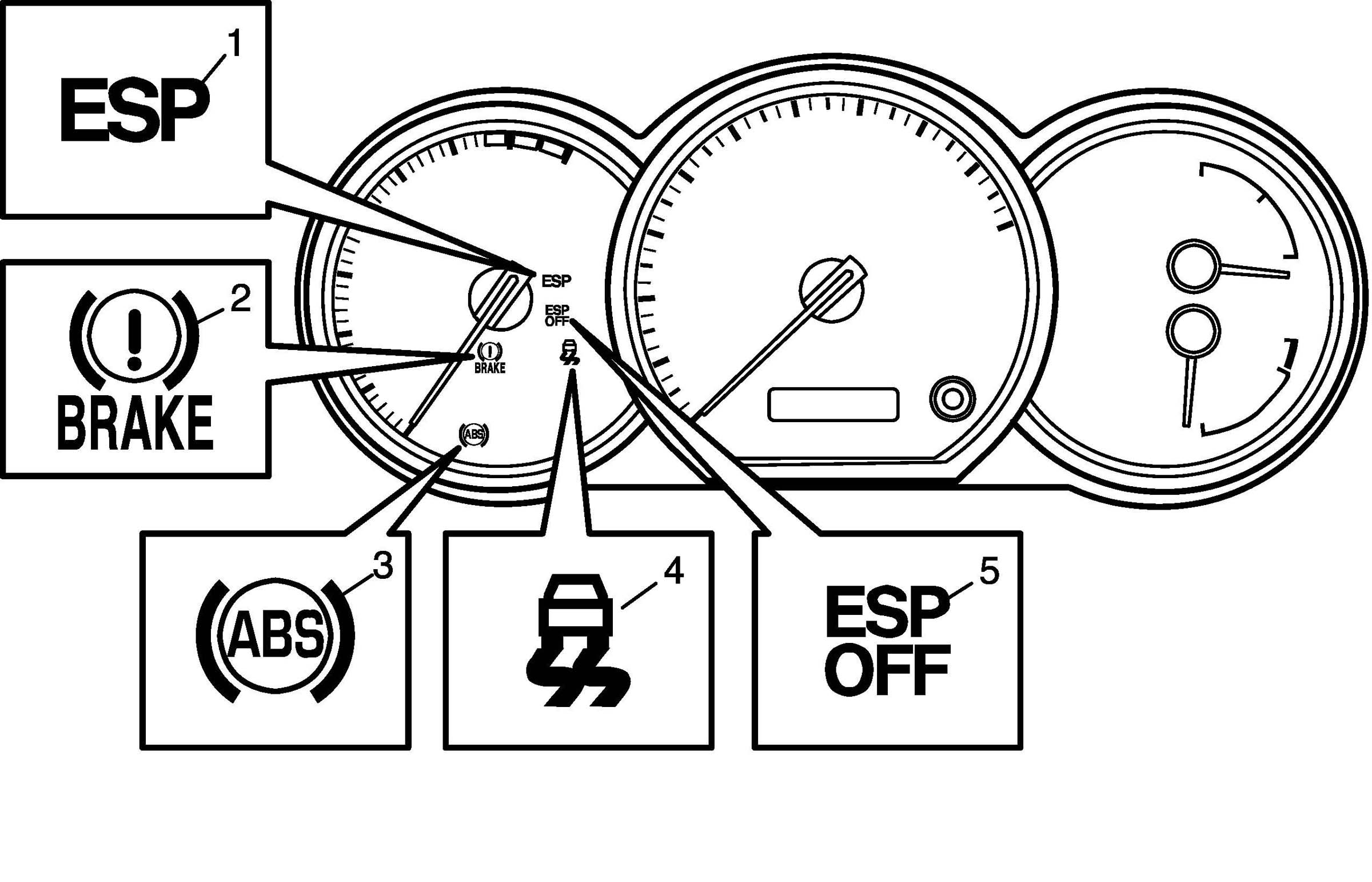

1. ESP warning light
2. EBD warning light (brake warning light)
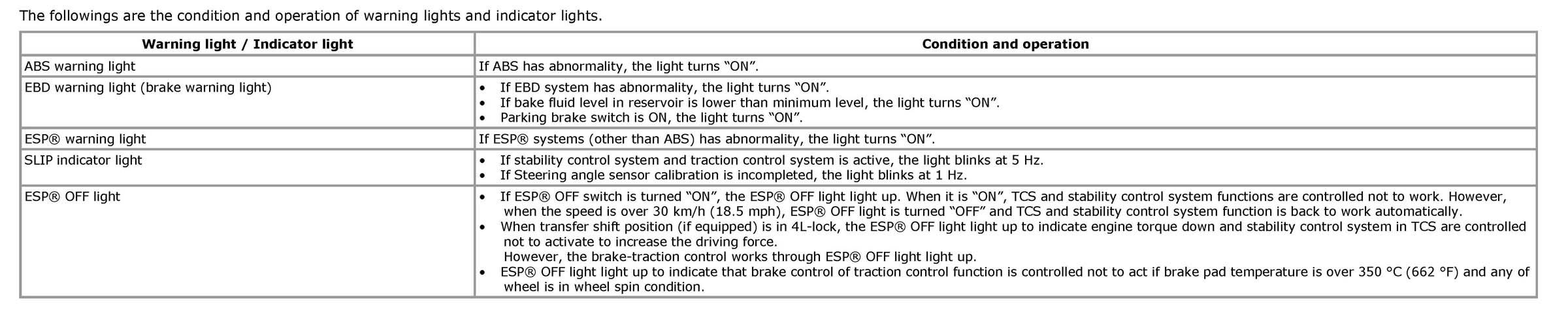
The followings are the condition and operation of warning lights and indicator lights.
CAN Communication System Description
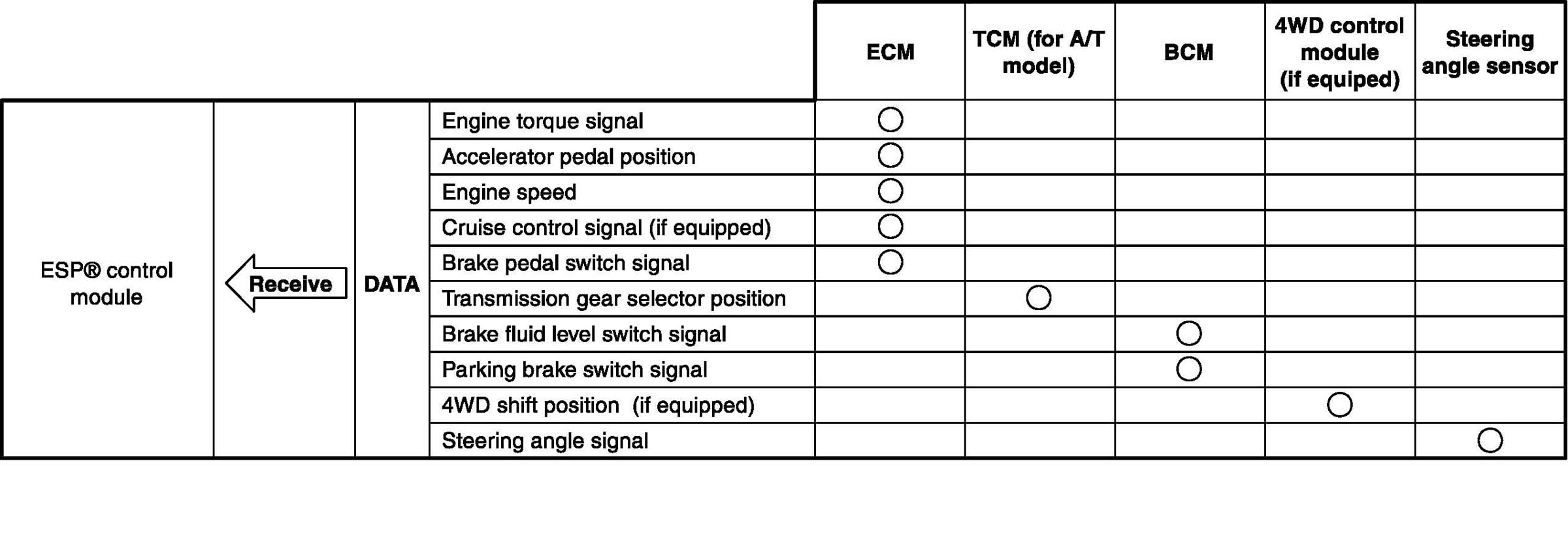
Refer to CAN Communication System Description for CAN communication system description. ESP(R) control module communicates control data with each control module as follows.
ESP(R) Control Module Transmission Data
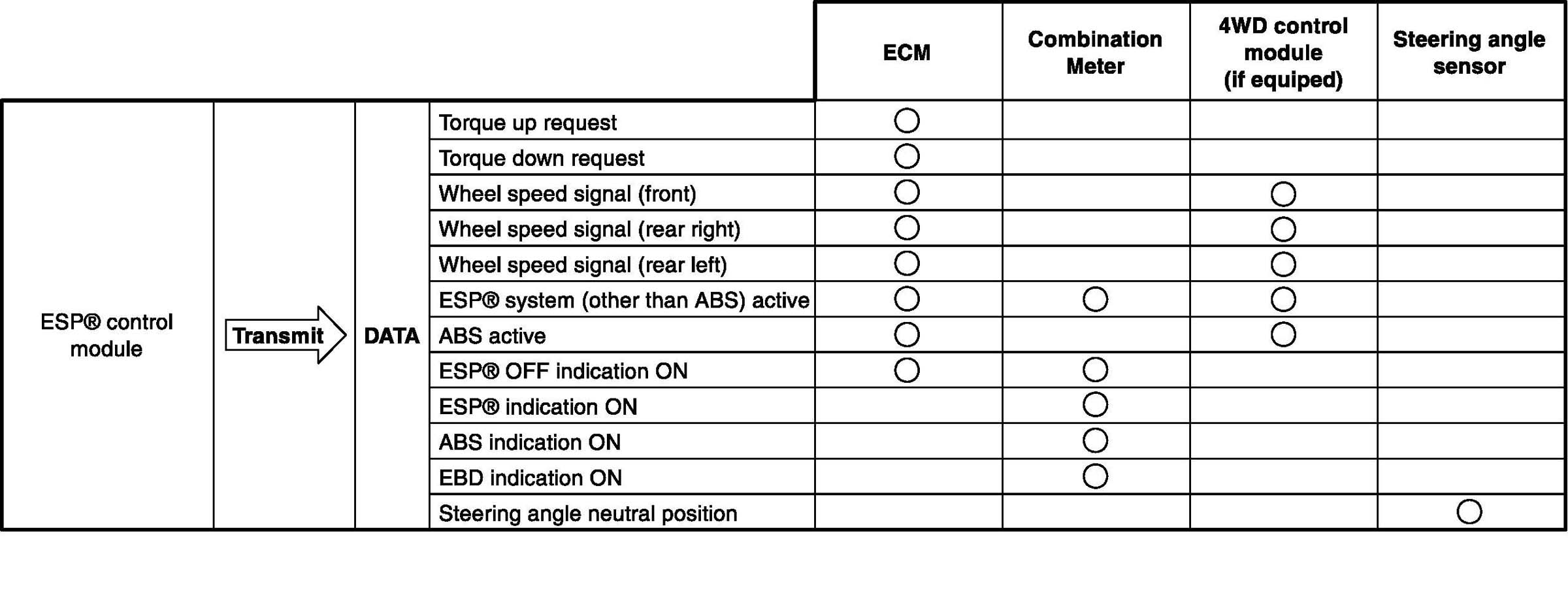
ESP(R) Control Module Reception Data
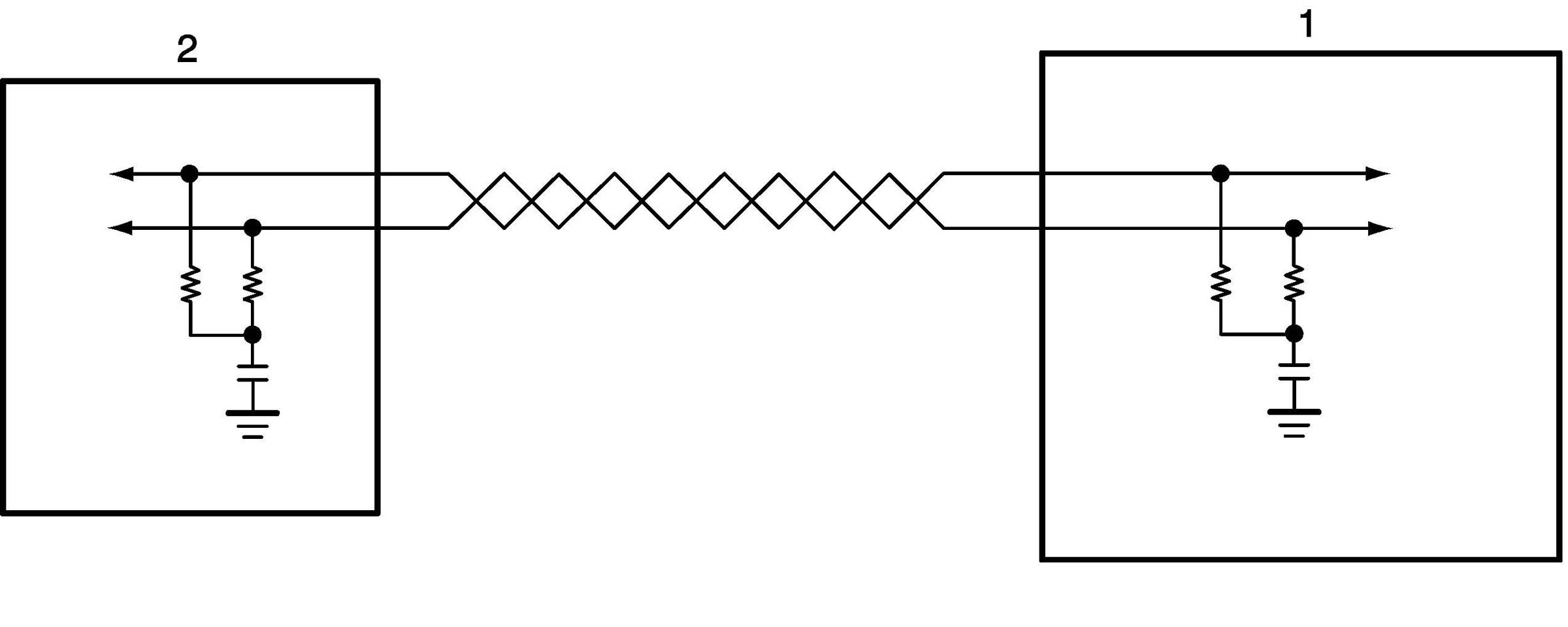
CAN Communication System For Electronic Stability Program Description
There is CAN communication system only for ESP(R) control module (1) and yaw rate / G sensor assembly (2).
This CAN communication system is independent from other control modules.
ESP(R) communicates control data with yaw rate / G sensor assembly as follows.
ESP(R) Transmission Data to Yaw Rate G Sensor Assembly
^ Longitudinal G neutral position
^ Lateral G neutral position
ESP(R) Reception Data from Yaw Rate G Sensor Assembly
^ Vehicle yaw rate signal
^ Vehicle longitudinal G signal
^ Vehicle lateral G signal
^ Yaw rate / G sensor assembly related malfunction