Cylinder Head Inspection
Cylinder Head InspectionReference: Valves and Cylinder Heads Removal and Installation
Reference: Valves and Cylinder Heads Disassembly and Reassembly
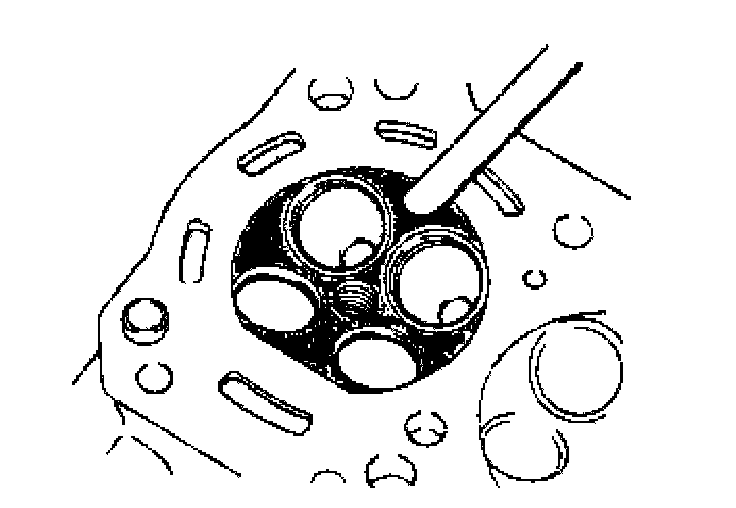
^ Remove all carbon from combustion chambers.
NOTE:
Do not use any sharp-edged tool to scrape off carbon. Be careful not to scuff or nick metal surfaces when decarboning. The same applies to valves and valve seats, too.
^ Check cylinder head for cracks on intake and exhaust ports, combustion chambers, and head surface.
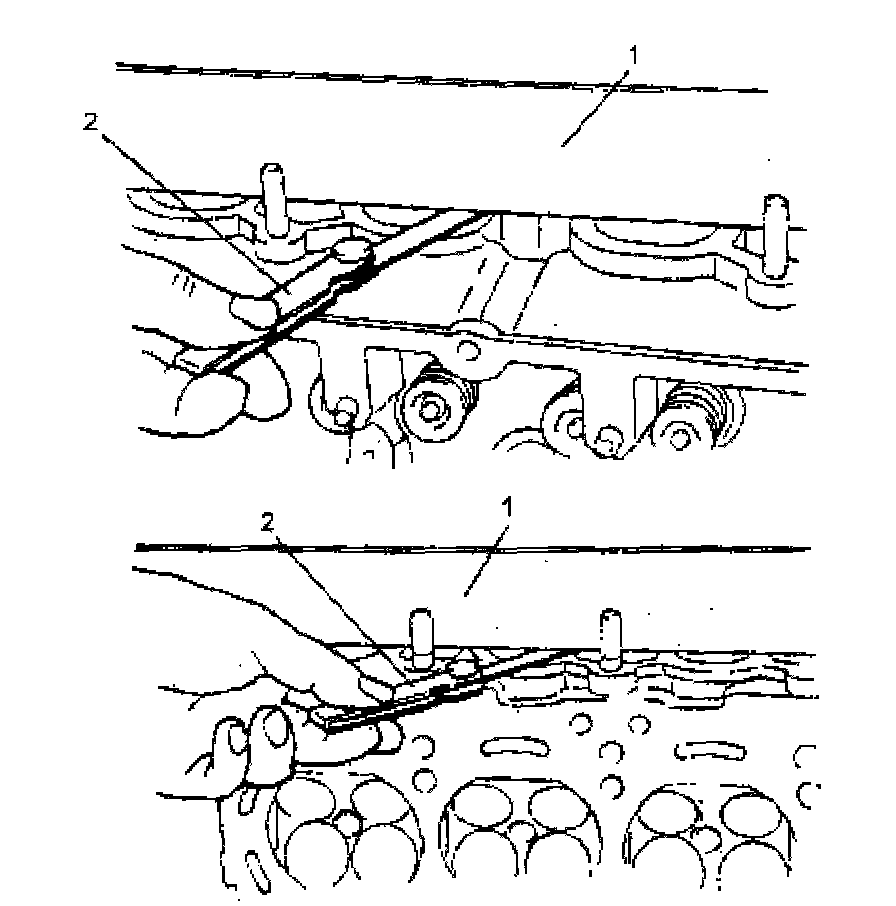
Using straightedge (1) and thickness gauge (2), check flatness of gasketed surface at a total of 6 locations. If distortion limit, given below, is exceeded, correct gasketed surface with a surface plate and abrasive paper of about #400 (Waterproof silicon carbide abrasive paper):
Place abrasive paper on and over surface plate, and rub gasketed surface against paper to grind off high spots. Should this fail to reduce thickness gauge readings to within limit, replace cylinder head.
Leakage of combustion gases from this gasketed joint is often due to warped gasketed surface: such leakage results in reduced power output.
Cylinder head gasketed surface distortion
Limit: 0.05 mm (0.002 inch)
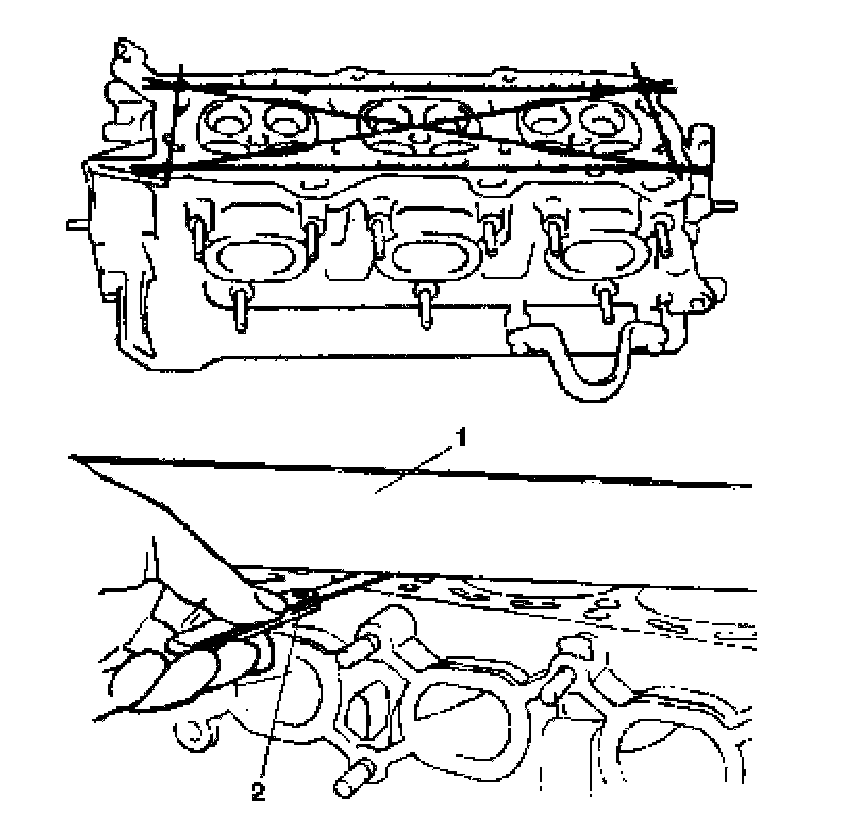
^ Distortion of manifold seating faces
Check seating faces of cylinder head for manifolds, using a straightedge (1) and thickness gauge (2), in order to determine whether these faces should be corrected or cylinder head replaced.
Manifold seating surface distortion
Limit: 0.10 mm (0.004 inch)