Fuel Pressure Test
WARNING: This page is about a different car, the 2002 Suzuki XL-7, 2002 Suzuki Vitara, 2002 Suzuki Grand Vitara, 2002 Suzuki Esteem, and 2002 Suzuki Aerio. However, it is still accessible from the selected car via links, so may be relevant.
- Release fuel system pressure. See RELIEVING FUEL PRESSURE . Remove fuel inlet hose banjo bolt. Install fuel pressure adapter and gauge in banjo bolt hole. See Fig 1.
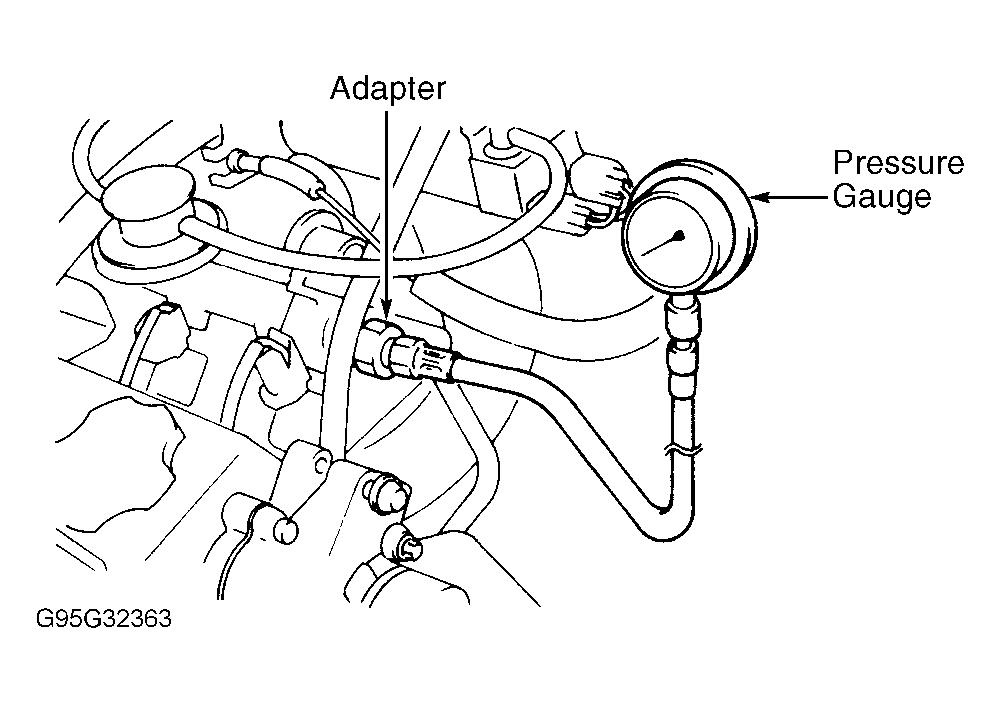 Courtesy of SUZUKI OF AMERICA CORP.
- Verify battery voltage is 11 volts or greater. Turn ignition on to operate fuel pump for 3 seconds. Turn ignition off. Repeat 3-4 times, and check fuel pressure. See FUEL PUMP PERFORMANCE table. Start engine and allow it to reach normal operating temperature. Measure fuel pressure at idle. See REGULATED FUEL PRESSURE table. Turn ignition off.
- If pressures are not within specification, check for faulty fuel pump, pressure regulator or restriction in fuel system. See B-3: FUEL PRESSURE INSPECTION under CIRCUIT TESTS. Repair as necessary. Release fuel pressure and remove fuel pressure gauge. Reinstall fuel inlet hose. Start engine. Ensure no fuel leaks are present.
FUEL PUMP PERFORMANCE
| Application |
psi (kg/cm2
) |
| Aerio, Esteem, Grand Vitara & XL-7 |
38.4-44.0 (2.7-3.1) |
| Vitara |
35.6-42.7 (2.5-3.0) |
REGULATED FUEL PRESSURE
| Application |
psi (kg/cm2
) |
| Aerio |
31.3-36.9 (2.2-2.6) |
| Esteem (1.6L) |
28.4-34.1 (2.0-2.4) |
| Esteem (1.8L) & Vitara |
30.0-37.0 (2.1-2.6) |
| Grand Vitara & XL-7 |
29.8-37.0 (2.1-2.6) |