P0430
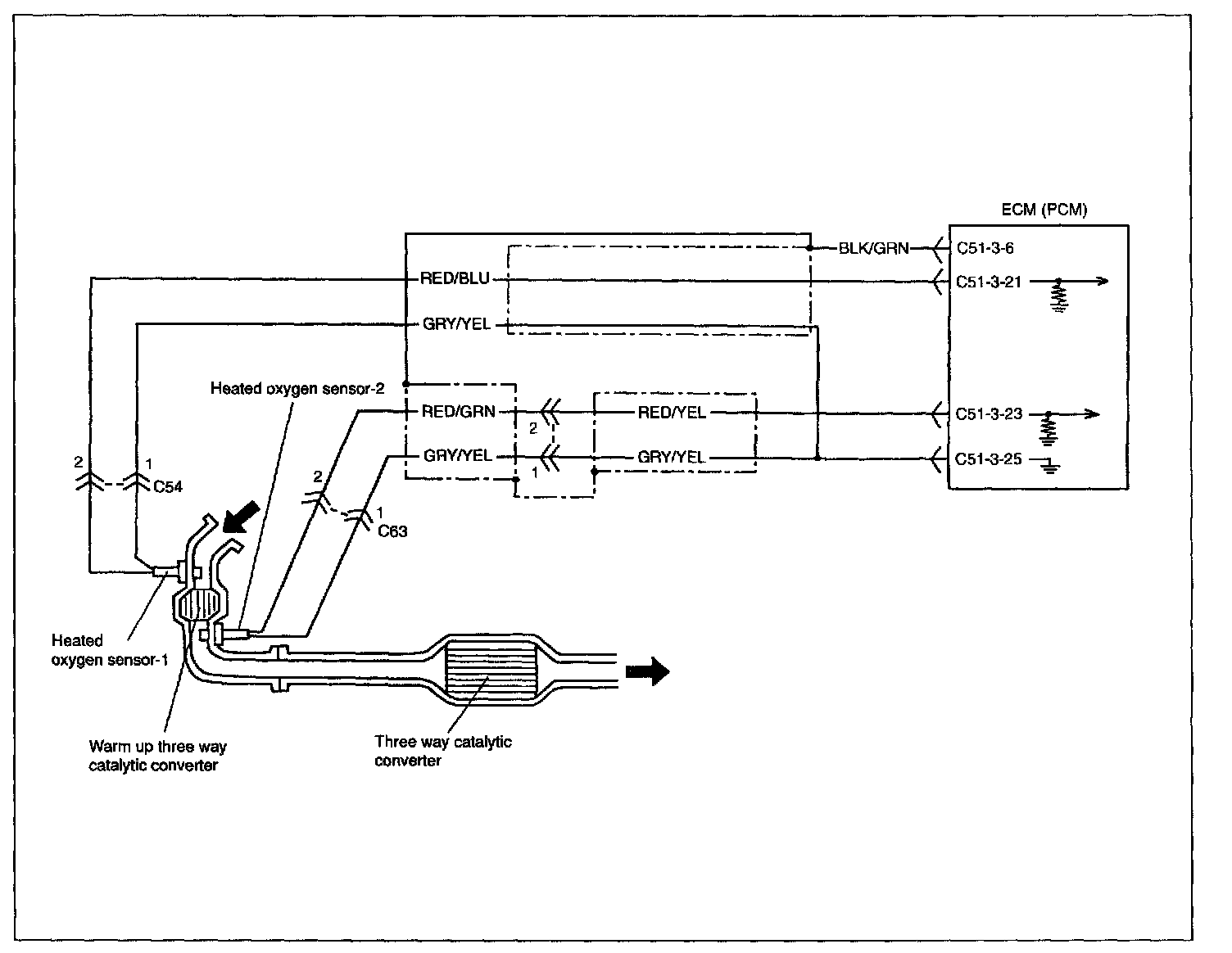
SYSTEM DIAGRAM
CIRCUIT DESCRIPTION
Exhaust oxygen concentration at the pre-catalyst and the post-catalyst of TWC is detected from HO2S-1 and HO2S-2 respectively and accordingly ECM (PCM) controls the closed loop which then controls the fuel injection volume. (Refer to "Engine and Emission Control System".) While the above control is going on and if TWC is in good condition, the output voltage of HO2S-2 is maintained at specified level. As TWC becomes deteriorated, even when the above control is going on, the exhaust gas which has passed TWC then passes HO2S-2 at the exhaust oxygen concentration similar to that of the pre-catalyst without being oxygenated or converted. Thus, waveforms of HO2S-1 and HO2S-2 output voltages become alike. ECM (PCM) judges deterioration of TWC by comparing waveforms of HO2S-1 and HO2S-2.
Detecting Condition And Trouble Area:

DTC CONFIRMATION PROCEDURE
NOTE: Check to make sure that following conditions are satisfied when using this "DTC CONFIRMATION PROCEDURE".
- Intake air temp.: -8 °C (18 °F) or higher
- Engine coolant temp.: -8 - 110 °C (18 - 230 °F)
- Altitude (barometric pressure) : 2400 m, 8000 ft or less (560 mmHg (75 kPa) or more)
1. Connect scan tool to DLC with ignition switch OFF
2. Turn ON ignition switch and clear DTC, pending DTC and freeze frame data by using scan tool.
3. Increase vehicle speed to 80 - 90 km/h (50 - 56 mph).
4. Keep above vehicle speed for 5 min. or more (Throttle valve opening is kept constant in this step).
5. Stop vehicle and check if pending DTC exists by using scan tool. If not, check if catalyst monitoring test has completed by using scan tool. If not in both of above checks (i.e., no pending DTC and catalyst monitoring test not completed), check vehicle condition (environmental) and repeat Step 3) through 5).
Steps 1 - 3:
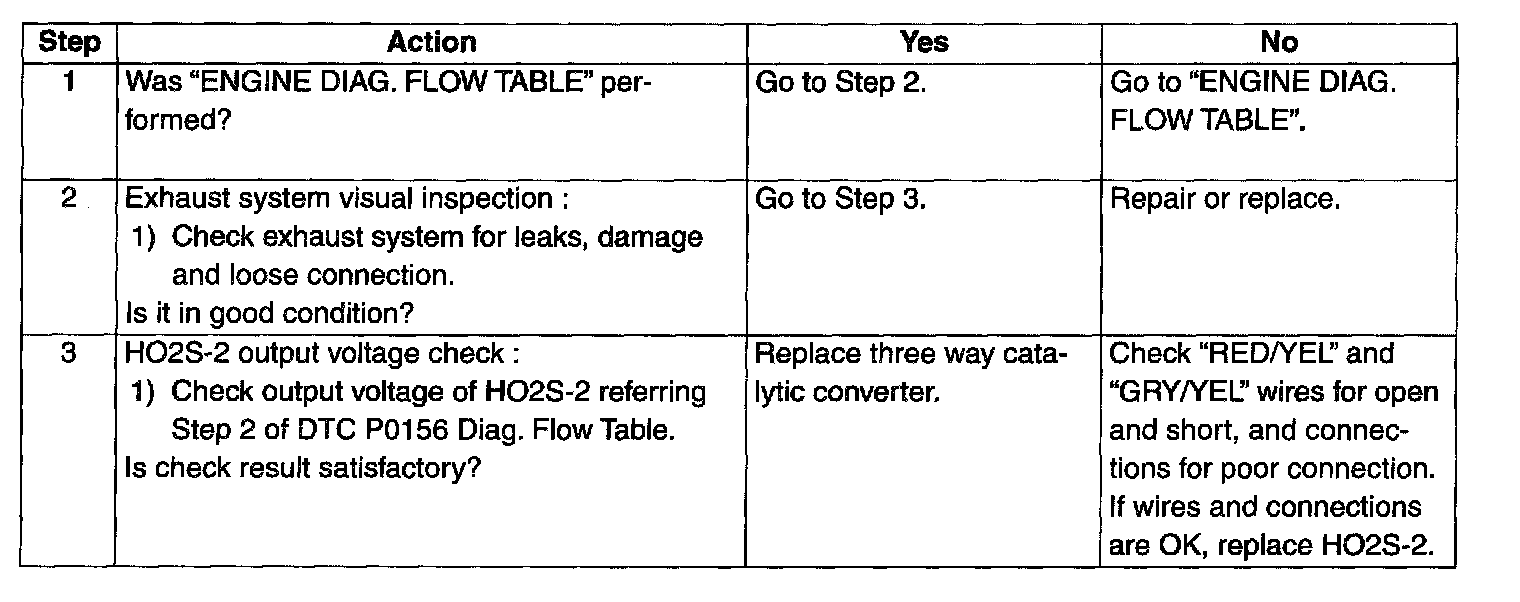
TROUBLESHOOTING