Diagnosis & Repair Procedure
- Perform DTC CONFIRMATION TEST . If DTC P0340 is set, go to next step. If DTC P0340 is not set, problem is intermittent. System is okay at this time. See TROUBLE SHOOTING - NO CODES article.
- Check starting system operation. If engine does not crank or cranks slowly, repair starting system. See appropriate STARTERS article in STARTING & CHARGING SYSTEMS. If starting system is okay, go to next step.
- Check for DTC P1500. See RETRIEVING DIAGNOSTIC TROUBLE CODES under SELF-DIAGNOSTIC SYSTEM. If DTC is present, go to DTC P1500: STARTER SIGNAL CIRCUIT MALFUNCTION . If DTC P1500 is not present, go to next step.
- Turn ignition off. Check for correct CMP sensor installation. Reinstall correctly and go to DTC CONFIRMATION TEST . If CMP sensor is installed correctly and problem is still present, go to next step.
- Disconnect CMP sensor connector. Check for poor terminal contact at CMP sensor. If poor terminal contact is found, repair as necessary and go to DTC CONFIRMATION TEST . If terminal contact is okay, turn ignition on. Measure voltage between CMP sensor harness connector terminals No. 1 (Blue/Black wire) and No. 3 (Purple/Red wire). If reading is 10-14 volts, go to step 7. If reading is not 10-14 volts, go to next step.
- Check for short or open in Blue/Black wire between CMP sensor and main relay. If wire is okay, check for short or open in Purple/Red wire between CMP sensor and PCM 26-pin connector C51-3 terminal No. 26. See WIRING DIAGRAMS article. Repair as necessary and go to DTC CONFIRMATION TEST .
- Measure voltage between CMP sensor harness connector terminals No. 2 (Yellow/Blue wire) and No. 3 (Purple/Red wire). If reading is 4-5 volts, on 1.6L engine, go to next step. If reading is 4-5 volts, on 2.0L engine, go to step 9. If reading is not 4-5 volts, check for open or short in Yellow/Blue wire between CMP sensor and PCM 30-pin connector C51-2 terminal No. 26. See WIRING DIAGRAMS article. If wire is okay, check for poor terminal contact at PCM 30-pin connector C51-2. If poor terminal contact is found, repair as necessary and go to DTC CONFIRMATION TEST . If terminal contact is okay, replace PCM and go to DTC CONFIRMATION TEST .
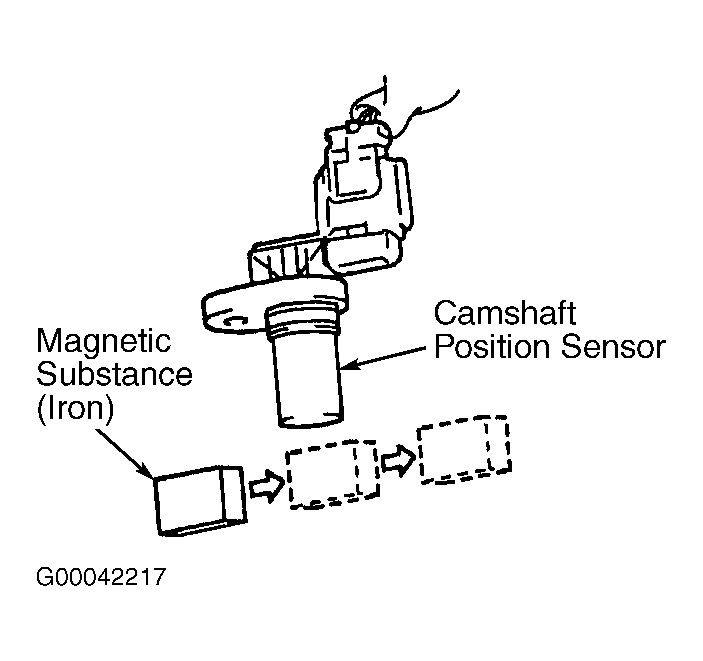
- Remove CMP sensor. Clean off any metallic particles that may be attached to sensor. Leave CMP connector connected to sensor. Disconnect ignition coil assembly and fuel injector connectors. Disconnect PCM 30-pin connector C51-2. Turn ignition on. Measure voltage between ground and PCM 30-pin harness connector C51-2 terminal No. 26 (Yellow/Blue wire) while passing a magnet about 0.03" (1 mm) from face of CMP sensor. See and Figure and Fig 1
. If reading toggles between 0-1 volt and 4-6 volts, go to step 10. If reading does not toggle between 0-1 volt and 4-6 volts, replace CMP sensor and go to DTC CONFIRMATION TEST .
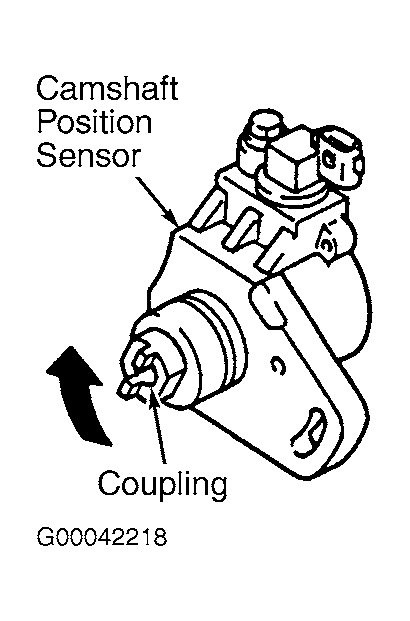
- Remove CMP sensor. Leave CMP connector connected to sensor. Disconnect ignition coil assembly and fuel injector connectors. Disconnect PCM 26-pin connector C51-3 and PCM 30-pin connector C51-2. Turn ignition on. Measure voltage between PCM 26-pin harness connector C51-3 terminal No. 26 (Purple/Red wire) and PCM 30-pin harness connector C51-2 terminal No. 26 (Yellow/Blue wire) while rotating CMP sensor coupling. See Figure and Fig 2
. If reading toggles between 0-1 volt and 4-6 volts, go to step 11. If reading does not toggle between 0-1 volt and 4-6 volts, replace CMP sensor and go to DTC CONFIRMATION TEST .
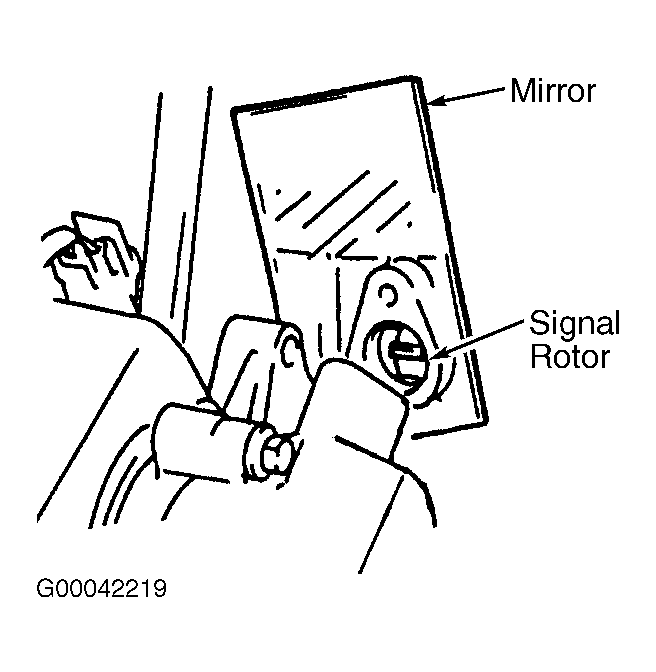
- On 1.6L engine, use a mirror to inspect signal rotor for damage or foreign material attached to it. See Fig 3. If problem is found, clean signal rotor or replace camshaft if damaged and go to DTC CONFIRMATION TEST . If no problem is found, problem is intermittent. System is okay at this time. See TROUBLE SHOOTING - NO CODES article. If intermittent problem is not found, replace PCM and go to DTC CONFIRMATION TEST .
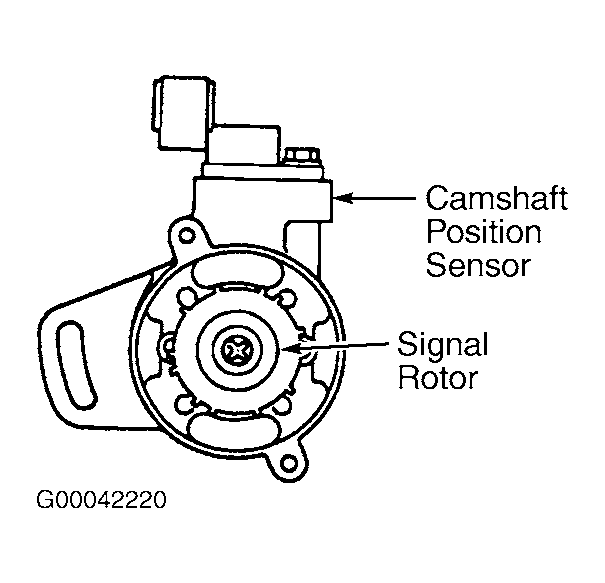
- On 2.0L engine, remove signal rotor cover. Inspect signal rotor for damage or foreign material attached to it. See Fig 4. If problem is found, clean signal rotor teeth or replace CMP sensor if damaged and go to DTC CONFIRMATION TEST . If no problem is found, problem is intermittent. System is okay at this time. See TROUBLE SHOOTING - NO CODES article. If intermittent problem is not found, replace PCM and go to DTC CONFIRMATION TEST .
 Courtesy of SUZUKI OF AMERICA CORP.
 Courtesy of SUZUKI OF AMERICA CORP.
 Courtesy of SUZUKI OF AMERICA CORP.
 Courtesy of SUZUKI OF AMERICA CORP.