Hydraulic Pressure Tests
NOTE:
Perform line pressure test when transmission fluid is at normal operating temperature. Ensure transaxle is not leaking. DO NOT run engine continuously at stall speed for more than 5 seconds.
- With engine off, remove plug and connect oil pressure gauge to plug hole. See Fig 1. Apply parking brake and block wheels. Start engine.
- Apply brake and shift into "D" range. Depress accelerator. Note pressure readings at idle and stall speeds. Repeat test in "R" range. Compare pressure readings to those listed in LINE PRESSURE SPECIFICATIONS table.
- Low pressure in both ranges indicates accelerator cable and/or T.V. cable may be out of adjustment, defective regulator valve, defective oil pump or defective valve body throttle valve.
- High pressure in both ranges indicates accelerator cable and/or T.V. cable may be out of adjustment, defective regulator valve, or defective valve body throttle valve.
- Low pressure in "D" range indicates "D" range oil circuit is leaking pressure or defective forward clutch. Low pressure in "R" range indicates "R" range oil circuit leaking pressure, defective direct clutch, or defective 1st and reverse brake. Reinstall plug and tighten to 80 INCH lbs. (9 N.m).
LINE PRESSURE SPECIFICATIONS
| Application |
Pressure - psi (kg/cm2
) |
| "D" Range |
| Idle Speed |
40-65 (2.6-4.6) |
| Stall Speed |
94-121 (6.6-8.5) |
| "R" Range |
| Idle Speed |
94-128 (6.6-9.0) |
| Stall Speed |
Over 189 (Over 13.3) |
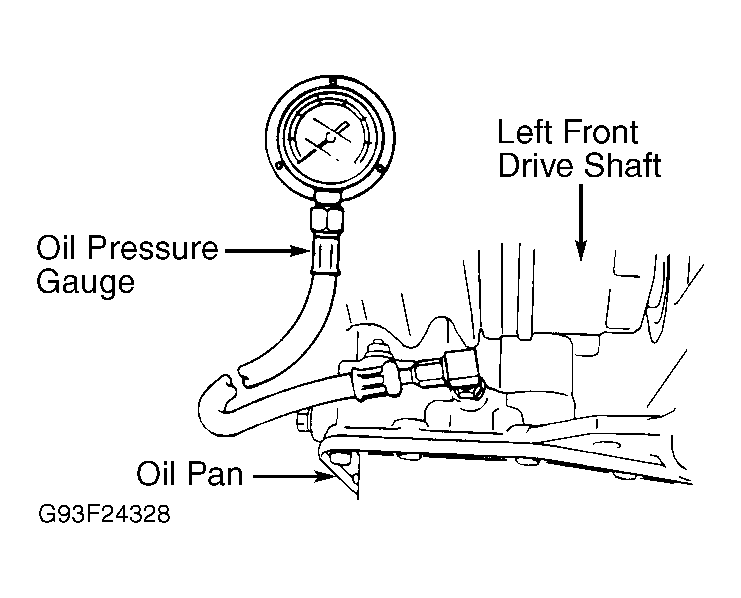 Courtesy of SUZUKI OF AMERICA CORP.