Brake Caliper: Service and Repair
REMOVAL1) Hoist vehicle and remove wheel.
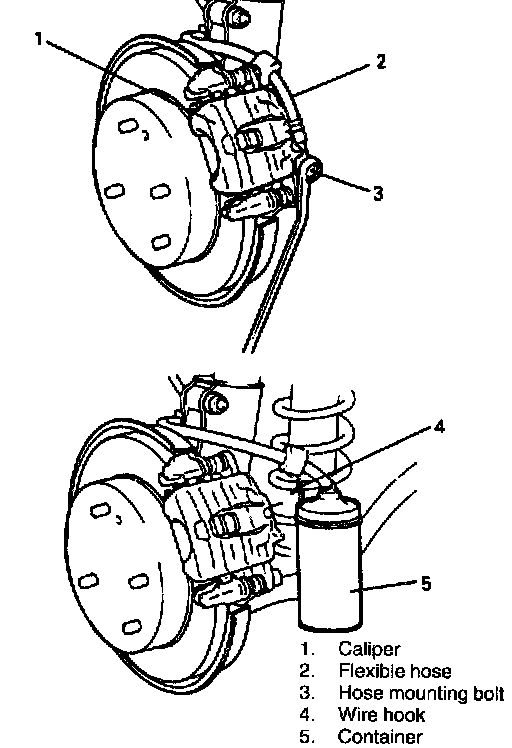
2) Remove brake flexible hose mounting bolt from caliper. As this will allow fluid to flow out of hose, have a container ready beforehand.
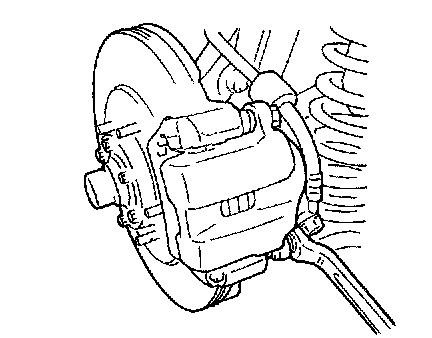
3) Remove caliper pin bolts.
4) Remove caliper.
DISASSEMBLY
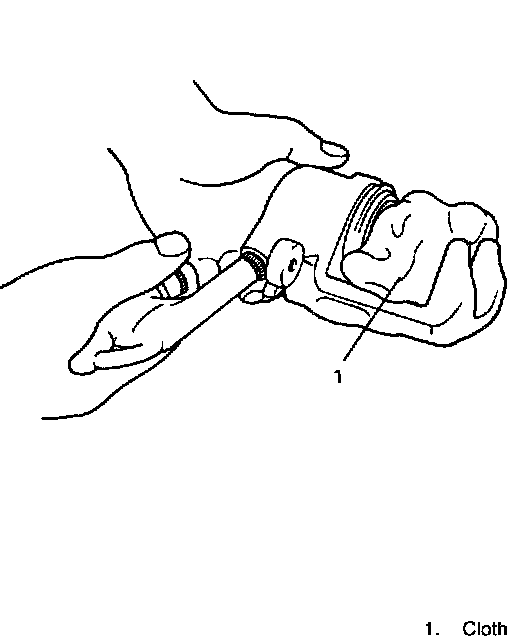
Before disassembly, clean all around caliper with brake fluid.
1) Remove anti noise shim (if equipped) and blow compressed air into cylinder through bolt hole where flexible hose was fitted. With this air pressure, piston can be pushed out of cylinder.
WARNING: Do not apply too highly compressed air which will cause piston to jump out of cylinder. It should betaken out gradually with moderately compressed air. Do not place your fingers in front of piston when using compressed air.
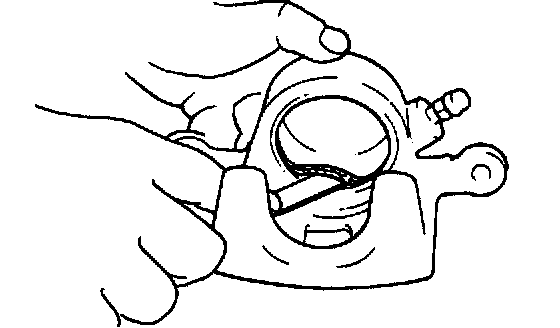
2) Remove piston seal using a thin blade like a thickness gauge, etc.
CAUTION: Be careful not to damage inside (bore side) of cylinder.
INSPECTION
Cylinder boot
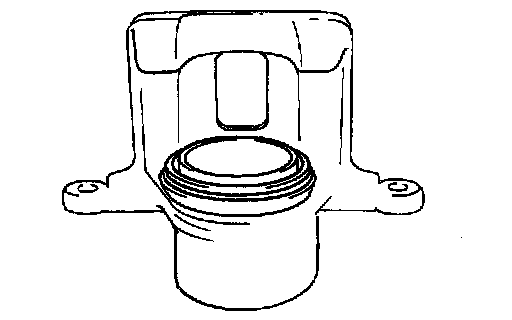
Check boots for breakage, crack and damage. If defective, replace.
Piston Seal
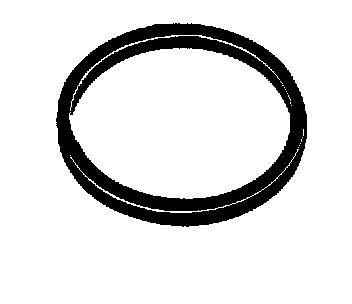
Excessive or uneven wear of pad lining may indicate unsmooth return of the piston. In such a case, replace rubber seal.
ASSEMBLY
Reassemble front brake in reverse order of disassembly, noting the following points.
CAUTION:
^ Wash each part cleanly before installation in the same fluid as the one used in master cylinder reservoir.
^ Never use other fluid or thinner.
^ Before installing piston and piston seal to cylinder, apply fluid to them.
^ After reassembling brake lines, bleed air from them.
Piston Seal
Piston seal is used to seal piston and cylinder and to adjust clearance between pad and disc. Replace with a new one at every overhaul. Fit piston seal into groove in cylinder taking care not to twist it.
Piston and Boot
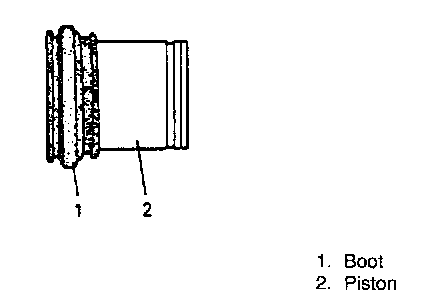
1) Before inserting piston into cylinder, install boot onto piston as shown.
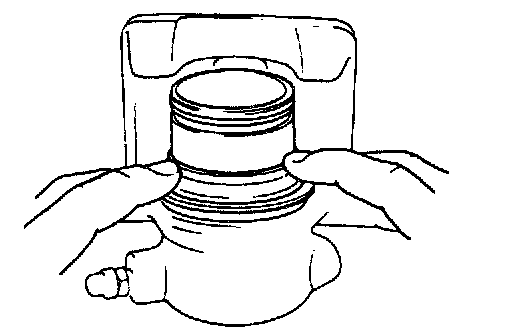
2) Fit boot as it is in above figure into boot groove in cylinder with fingers.
Check to make sure that boot is fitted into boot groove in cylinder completely in its circumference.
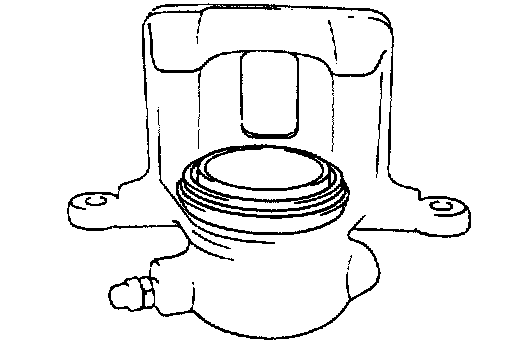
3) Insert piston into cylinder by hand and fit boot in boot groove in piston.
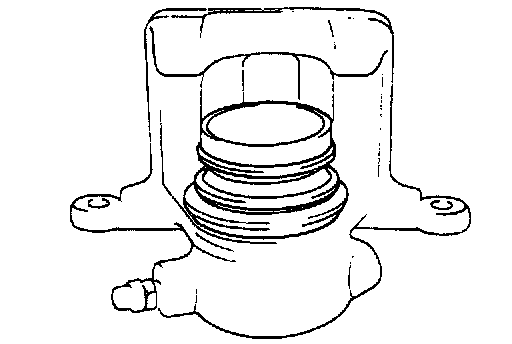
4) To confirm that boot is fitted in its groove in cylinder properly, pull piston out of cylinder a little but do not take it all out.
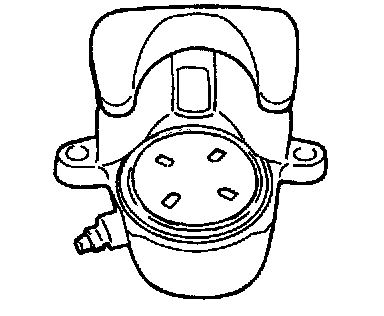
5) Insert piston into cylinder by hand.
6) Install anti noise shim (H25 engine).
Caliper
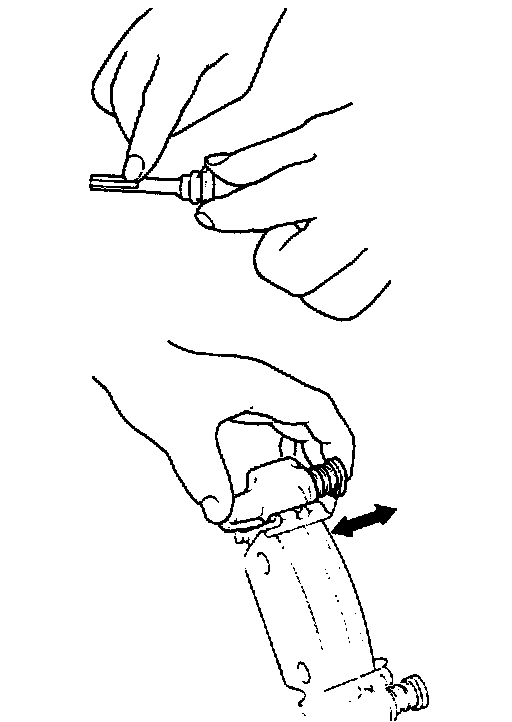
Before installing caliper (cylinder body) to carrier, check to ensure that guide pin (pin bolt) inserted in each caliper carrier hole can be moved smoothly in thrust direction.
NOTE: Where temperature gets as low as -30°C in cold weather, use rubber grease whose viscosity varies very little even at -40°C (-40°F).
INSTALLATION
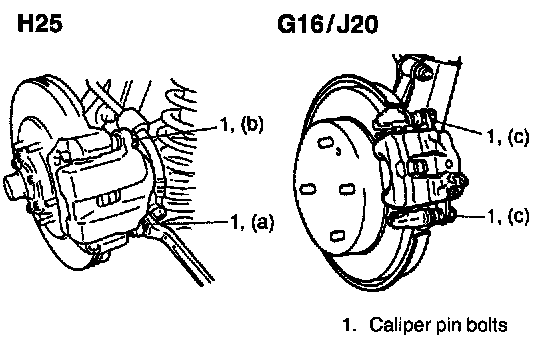
1) Install caliper to caliper carrier.
2) Torque caliper pin bolts to specifications.
Tightening Torque
(a): 50 Nm (5.0 kg-m, 36.5 ft. lbs.)
(b): 85 Nm (8.5 kg-m, 61.5 ft. lbs.)
(c): 27 Nm (2.7 kg-m, 20.0 ft. lbs.)
NOTE: Make sure that boots are fit into groove securely.
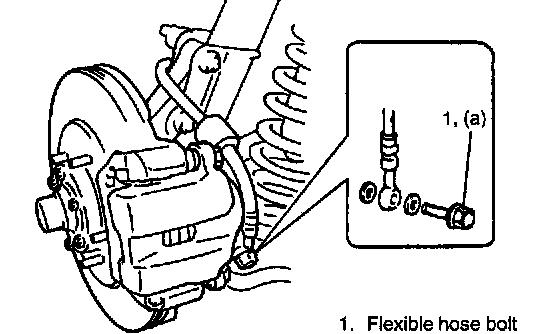
3) Install brake flexible hose as shown and torque hose mounting bolt to specification.
Tightening Torque (a): 23 Nm (2.3 kg-m, 17.0 ft. lbs.)
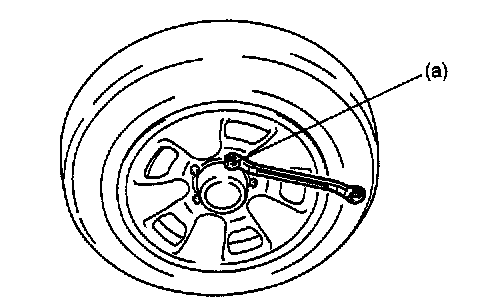
4) Torque wheel nuts to specification.
Tightening Torque (a): 95 Nm (9.5 kg-m, 69.0 ft. lbs.)
5) After completing installation, fill reservoir with brake fluid and bleed brake system. Perform brake test and check each installed part for oil leakage.