Hydraulic Control Assembly - Antilock Brakes: Testing and Inspection
ABS HYDRAULIC UNIT OPERATION CHECK1. Check that basic brake system other than ABS is in good condition.
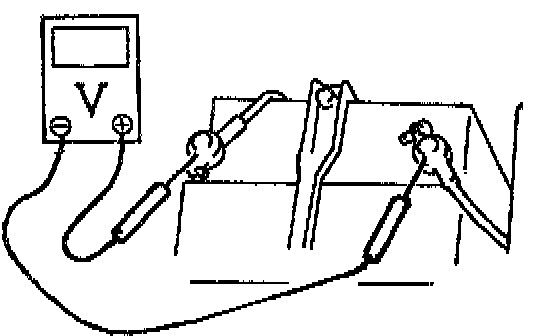
2. Check that battery voltage is 11 V or higher.
3. With "ABS" warning lamp, check that no abnormality is detected in ABS. Refer to "DIAGNOSTIC TROUBLE CODE (DTC) CHECK".
4. Lift up vehicle.
5. Set transmission to neutral and release parking brake.
6. Turn each wheel gradually by hand to check if brake dragging occurs. If it does, correct.
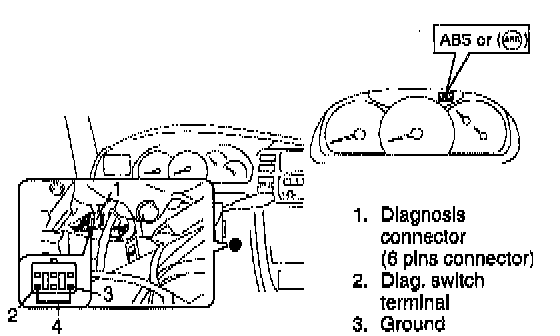
7. With diag. switch terminal of diagnosis connector connected to ground by using service wire, turn ignition switch ON and check if "ABS" warning lamp indicates DTC 12.
8. Turn ignition switch "OFF".
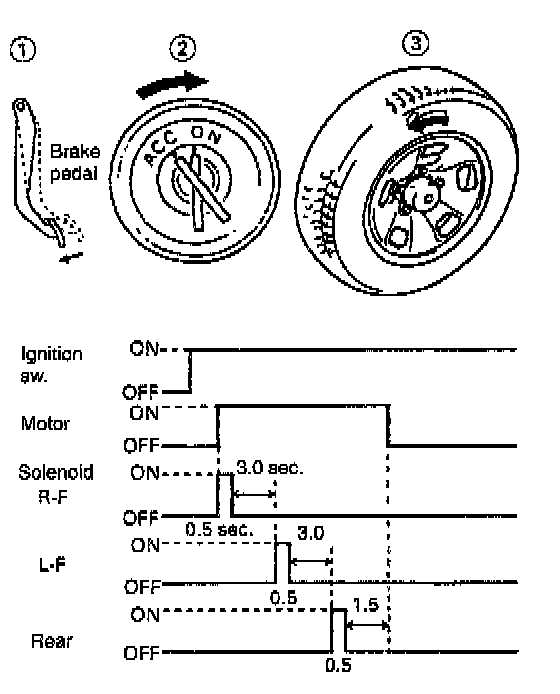
9. Perform following checks with help of another person.
Brake pedal should be depressed and then ignition switch turned ON by one person and wheel should be turned by another person's hand. At this time, check that:
^ Operation sound of solenoid is heard and wheel turns only about 0.5 sec. (Brake force is depressurized).
^ Operation sound of pump motor is heard and pulsation is felt at brake pedal.
10. If all 4-wheels cannot be checked during one ignition cycle (OFF -> ON), repeat Steps 8 and 9 till all 4 wheels are checked. If a faulty condition is found in Steps 9 and 10, replace hydraulic unit/control module assembly.
11. Turn ignition switch "OFF" and remove service wire from diagnosis connector.