P0443
DTC P0443 EVAP CONTROL SYSTEM INCORRECT PURGE FLOW
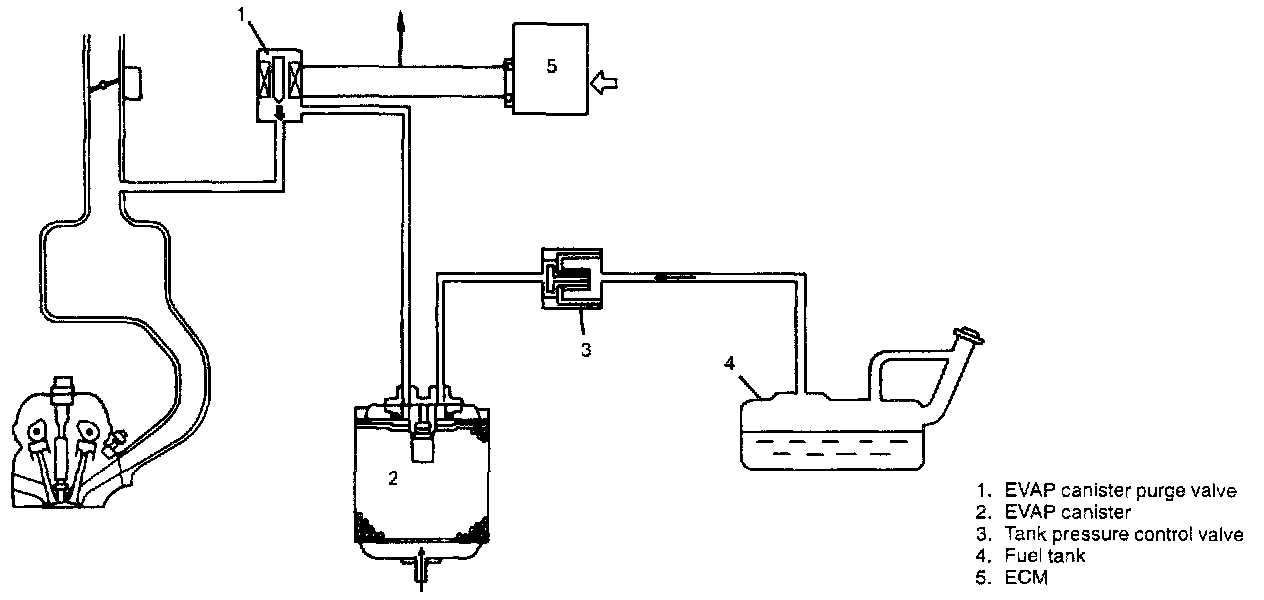
SYSTEM DIAGRAM
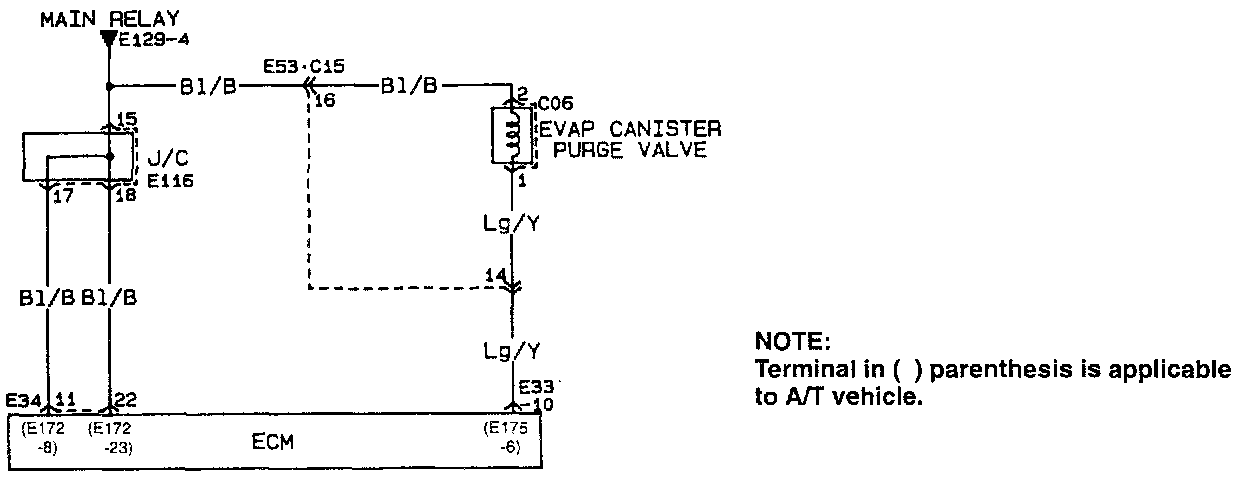
WIRING DIAGRAM
CIRCUIT DESCRIPTION
An evaporative emission control system is used to prevent emission of fuel vapor.
The vapor generated in the fuel tank while driving or the engine at a stop passes through a tank pressure control valve and enters the EVAP canister where the charcoal absorbs and stores the fuel vapor.
The EVAP canister purge valve is controlled by ECM according to signals from various sensors.
When none of the following conditions exists, ECM controls ON/OFF (open/close) switching of the canister purge valve at a constant rate (10 times per second) and its opening (amount of purge air) by increasing and decreasing its ON time.
- When idle switch is ON.
- When engine coolant temp. is low.
- When engine speed is low.
- When vehicle is stopped.
The higher the engine speed rises and the more fuel mixture is drawn in, the larger amount of air is purged.
When the purge valve opens, fuel vapor in the canister is sucked into intake manifold.
In this state, the canister is purged or cleaned by air drawn through the filter at the bottom of the canister.
The tank pressure control valve is provided to keep the pressure in the fuel tank constant. When the pressure in the fuel tank becomes positive and reaches its specified value, it opens the valve to let the vapor flow into the EVAP canister. On the other hand, when the pressure in the fuel tank becomes negative and reaches its specified value, it opens the valve to let the air flow into the fuel tank.
Based on the change in the fuel injection volume feed back compensation during the EVAP canister purge flow (while the EVAP canister purge valve is open), ECM checks whether there is an EVAP canister purge flow or not.
At this time, if there is a change in the fuel injection volume feed back compensation, the EVAP canister purge flow is judged to be normal. But if there isn't, ECM performs control as described below while the engine is idling.
ECM stops the idle speed feed back control and then increases opening (ON duty) of the EVAP canister purge valve gradually. At this time, it checks whether there is an EVAP canister purge flow or not based on the change in the engine idle speed.

DETECTING CONDITION
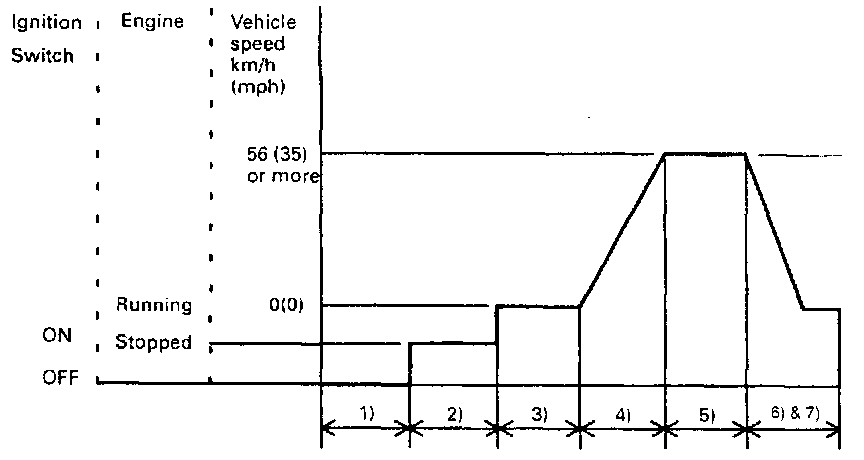
DTC CONFIRMATION PROCEDURE
WARNING:
- When performing a road test, select a place where there is no traffic or possibility of a traffic accident and be very careful during testing to avoid occurrence of an accident.
- Road test should be carried out with 2 persons, a driver and a tester, on a level road.
NOTE: Check to make sure that following conditions are satisfied when using this DTC CONFIRMATION PROCEDURE.
- Intake air temp.: between -14°C and 70°C (6.8°F and 158°F).
- Atmospheric pressure (Altitude): 540 mmHg, 72 kPa or more (2790 m, 9150 ft or less).
- Fuel level : higher than 114 (fuel level meter indication).
1) Connect scan tool to DLC with ignition switch OFF
2) Turn ON ignition switch and clear DTC, pending DTC and freeze frame data by using scan tool.
3) Start engine and warm up it completely.
4) Increase vehicle speed to 56 km/h (35 mph) or more.
5) keep driving above vehicle speed for 10 mm or more (Change of vehicle speed is permitted in this step).
6) Release accelerator pedal, stop vehicle and run engine at idle speed for 1 min.
7) Check pending DTC and DTC by using scan tool.
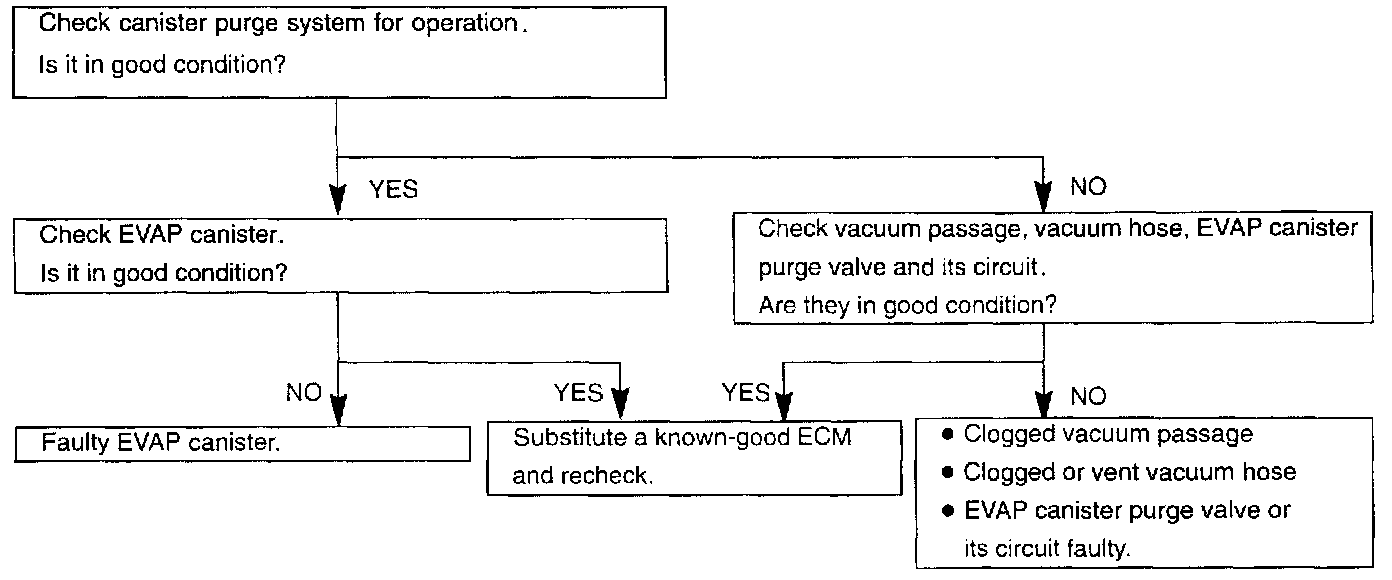
TROUBLESHOOTING
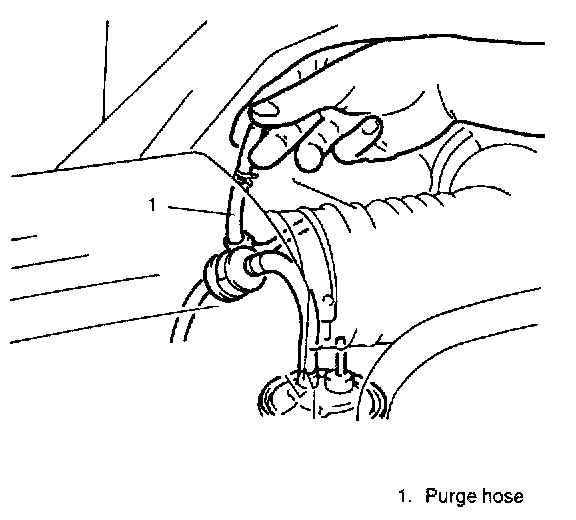
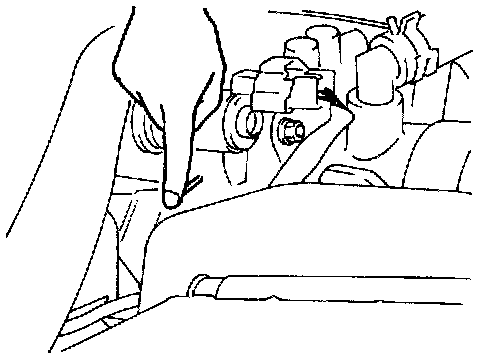
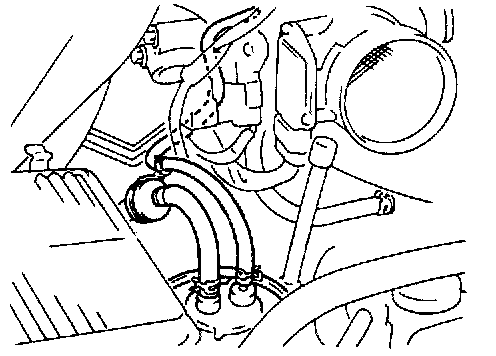
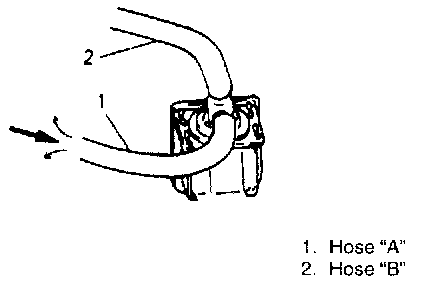
Canister Purge System Check
1) Warm up engine to normal operating temperature.
2) Stop engine and hoist vehicle so that rear wheels rotate freely.
3) Start engine release parking brake lever, set M/T in "2nd" or A/T in "L" and transfer in "2H".
WARNING: Make sure that transfer is set to "2H" range position for this check. If it is set to "4H" or "4L" position, front wheel turn at high speed and a very dangerous situation may occur.
4) Disconnect purge hose from EVAP canister.
5) Place finger against the end of disconnected hose and check that vacuum is not felt there when engine is running at idle speed.
6) Also check that vacuum is felt when engine speed is increased to higher than about 2,000 r/min.
Vacuum Passage Inspection
Start engine and run it at idle speed. With finger placed against vacuum nozzle, check that vacuum is applied.
If it is not applied, clean vacuum passage by blowing compressed air.
Vacuum Hose Inspection
Check hoses for connection, leakage, clog and deterioration.
Replace as necessary.
EVAP Canister Purge Valve And Its Circuit Check
1) Disconnect vacuum hoses from intake manifold and EVAP canister.
2) With ignition switch ON, blow into hose "A". Air should not come out of hose "B".
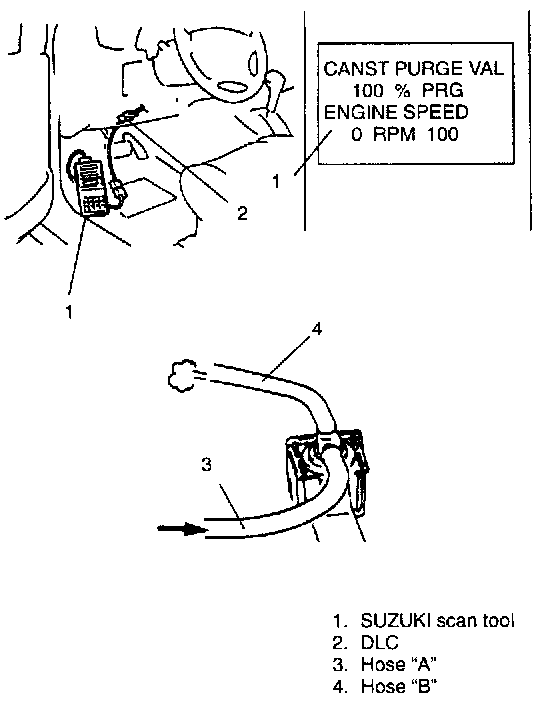
Using SUZUKI scan tool
3) Connect SUZUKI scan tool to DLC with ignition switch OFF.
3-1) Turn ON EVAP canister purge valve by using SUZUKI scan tool with ignition switch ON.
In this state, blow hose "A".
Air should come out of hose "B".
WARNING: Do not suck the air through valve. Fuel vapor inside valve is harmful.
If check results are as described above, EVAP canister purge valve and its circuit are in good condition, connect vacuum hoses securely.
If not, proceed to step 4).
Not using SUZUKI scan tool
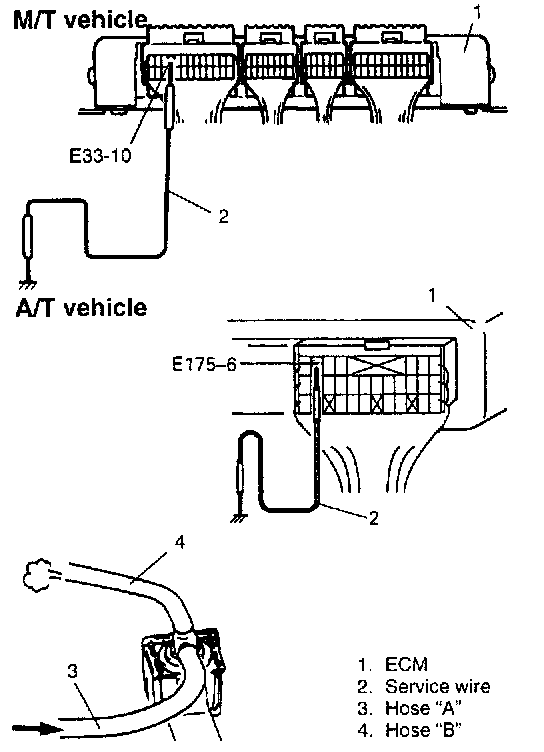
3) Using a service wire, connect E33-10 (E175-6) terminal of ECM coupler and body ground with ignition switch OFF.
3-1) Turn ON ignition switch.
In this state, blow hose "A".
Air should come out of hose "B".
WARNING: Do not suck the air through valve. Fuel vapor inside valve is harmful.
If check results are as described above and E33-1 0 (E175-6) terminal to ECM connection is in good condition, EVAP canister purge valve and its circuit are in good condition, connect vacuum hoses securely.
If not, proceed to step 4).
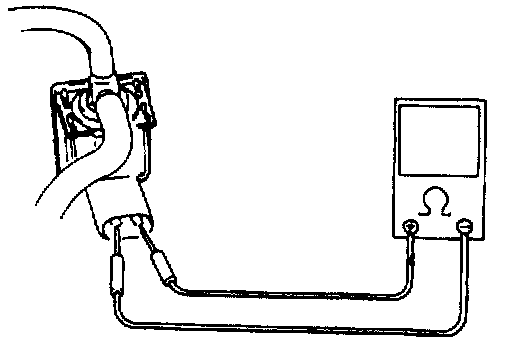
4) With ignition switch OFF, disconnect coupler from EVAP canister purge valve.
5) Check resistance between two terminals of EVAP canister purge valve.
Resistance of EVAP canister purge valve: 28-36ohms at 20°C (68°F)
If resistance is as specified, proceed to next operation check. If not, replace.
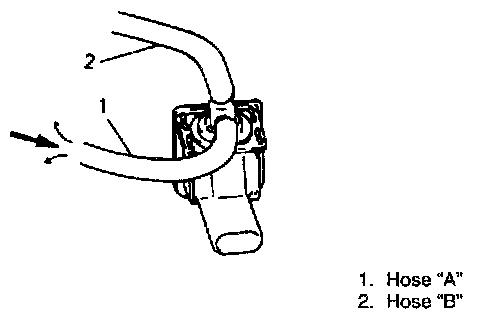
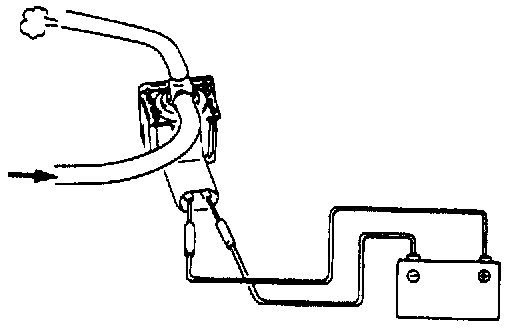
6) With coupler disconnected, blow into hose "A". Air should not come out of hose "B".
7) Connect 12V-battery to solenoid purge valve terminals. In this state, blow hose "A".
Air should come out of hose "B".
WARNING: Do not suck the air through valve. Fuel vapor inside valve is harmful.
If check result is as specified above, check EVAP canister purge valve harness.
If not, replace EVAP canister purge valve.
EVAP Canister Inspection
WARNING: DO NOT SUCK nozzles on EVAP canister. Fuel vapor inside
EVAP canister is harmful.
1) Disconnect vacuum hoses from EVAP canister.
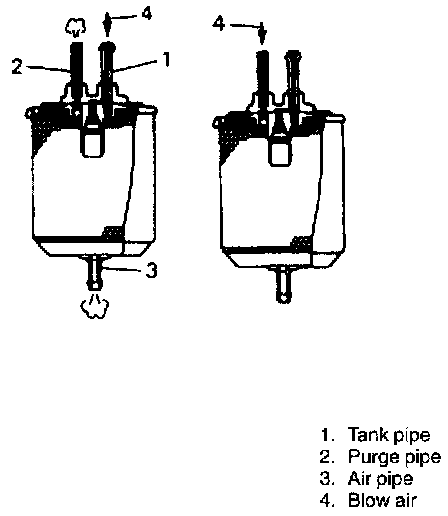
2)
- When air is blown into tank pipe, there should be no restriction of flow through purge pipe and air pipe.
- When air is blown into purge pipe, air should not pass through either tank pipe or air pipe.
3) If operation differs from above description, EVAP canister must be replaced.
4) Connect hoses to canister.