DTC P0440: Evaporative (EVAP) Control System Malfunction, Or DTC P0455: Evaporative (EVAP) Control System Gross Leak Detected
- Before diagnosis, check to be sure fuel filler cap is of correct style and tightened securely. Visually inspect fuel filler cap gasket. Replace fuel filler cap if necessary, and retest system. Check system vacuum hoses for deterioration and secure fit. Repair as necessary. If fuel filler cap and vacuum hoses are okay, go to next step.
- Visually inspect EVAP Canister for damage or leaks. Check operation of EVAP Canister by referring to DTC 0443, step 3). If EVAP Canister tests as specified, check operation of EVAP canister purge valve by referring to DTC 0443, steps 5) - 7). If EVAP canister purge valve tests as specified, check fuel tank pressure sensor by referring to DTC P0450, steps 2) - 4). If fuel tank pressure sensor tests as specified, go to next step.
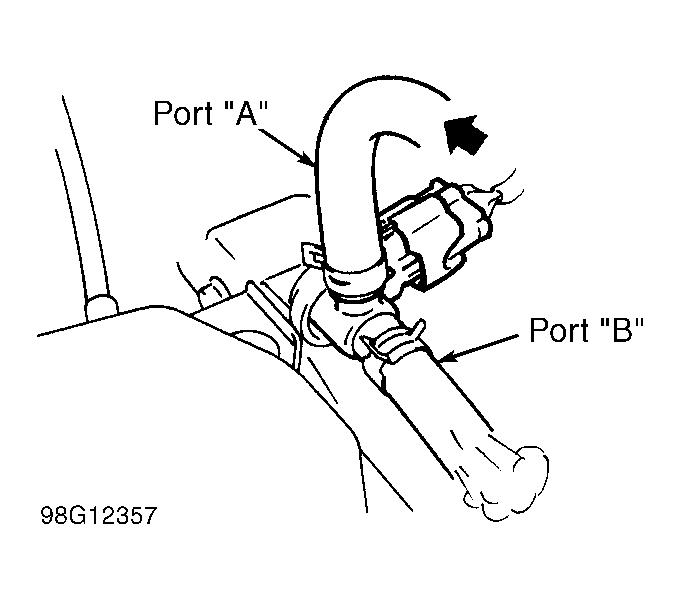
- Check operation of EVAP Canister Air Valve (ECAV). Disconnect ECAV hose from EVAP canister. Turn ignition on. Blow air into port "A". See Fig 1
. Air should escape from port "B". Turn ignition off. Connect scan tool. Turn ignition on. Select MISC. TESTS. Command ECAV on. Blow air into port "A". Air should not escape from port "B". Replace ECAV if air does not escape as specified. If air escapes ECAV as specified, go to next step.
- Turn ignition off. Disconnect ECAV harness connector. Using an ohmmeter, measure resistance between ECAV terminals. Resistance should be 25-30 ohms at 68°F (20°C). If resistance is not as specified, replace ECAV. If resistance is as specified, blow air into port "A". Replace ECAV if air does not escape port "B". If air escapes port "B", go to next step.
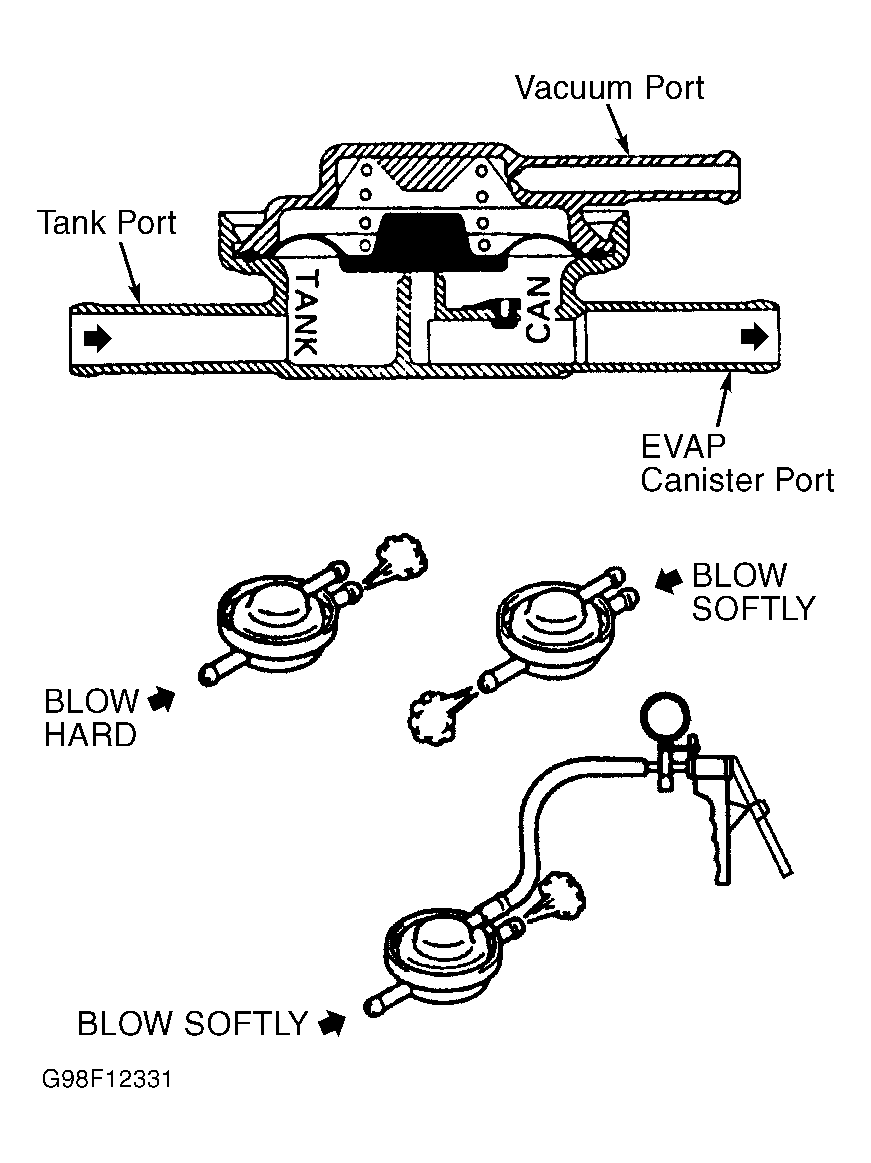
- Check operation of Tank Pressure Control Valve (TPCV). Disconnect hoses from TPCV. Air should escape from EVAP canister port when air is blown hard into tank port of (TPCV). See Fig 2
. If air does not escape as specified, replace (TPCV). If air escapes as specified, go to next step.
- Air should escape from tank port when air is blown softly into EVAP canister port. If air escapes as specified, go to next step. If air does not escape as specified, or if air must be blown hard into EVAP canister port before it will escape from tank port, replace TPCV.
- Apply vacuum to vacuum port. See Fig 2
. Air should escape from EVAP canister port when air is blown softly into tank port. If air does not escape as specified, replace TPCV. If air escapes as specified, go to next step.
 Courtesy of SUZUKI OF AMERICA CORP.
 Courtesy of SUZUKI OF AMERICA CORP.
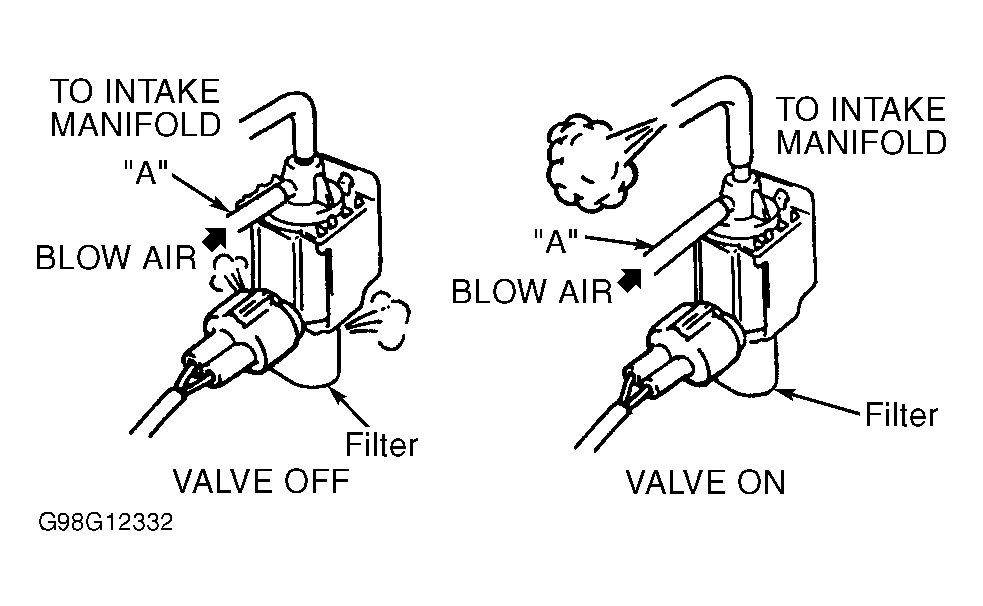
- Check operation of Tank Pressure Control Solenoid Valve (TPCSV). Disconnect hoses from TPCSV. Turn ignition off. Connect scan tool to Data Link Connector (DLC). Turn ignition on, clear DTC and select MISC TEST. Command TPCSV on. Blow into port "A". Air should now escape from intake manifold port, and not out filter. See Fig 3
. With ignition off and TPCSV in off position, air should now escape from filter when blowing air into port "A". If TPCSV operates as specified, go to next step. If TPCSV does not operate as specified, check circuit wiring and TPCSV for an open. If wiring is okay and TPCSV operates as specified, replace PCM.
 Courtesy of SUZUKI OF AMERICA CORP.
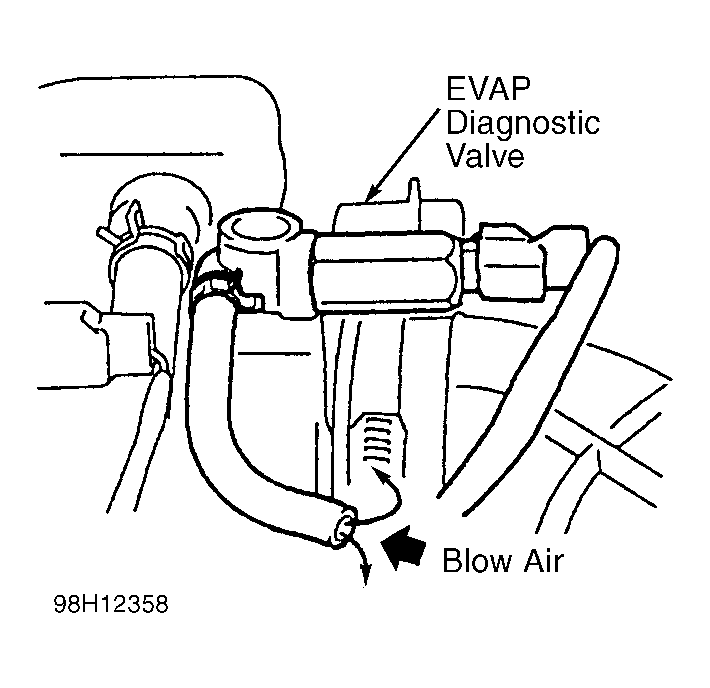
- Check EVAP Diagnostic Valve (EDV). Disconnect vacuum hose from 3-way-joint. Turn ignition on. Blow air into hose. See Fig 4
. Air should not enter throttle body. If air enters throttle body, replace EDV. If air does not enter throttle body, turn ignition off. Ground PCM harness connector "B" terminal No. 25. Turn ignition on. EDV should be making operating sound. Blow air into hose. If air enters throttle body, go to step 11). If air does not enter throttle body, go to next step.
- Turn ignition off. Disconnect EDV harness connector. Using an ohmmeter, measure resistance between terminals of EDV. Resistance should be 19-24 ohms at 68°F (20°C). If resistance is not as specified, replace EAV. If resistance is as specified, blow air into hose with EDV harness connector disconnected. If air does not enter throttle body, go to next step. If air enters throttle body, check for poor connection to EAV. If connections are okay, check throttle body air passage for restriction. If EAV air passage is okay, replace EAV.
- Check for vacuum leakage from fuel tank or fuel filler hose. Repair any leaks found, clear DTC and retest system.
 Courtesy of SUZUKI OF AMERICA CORP.