California Models Only
- Disconnect Yellow vacuum hose to EGR valve from straight connection on Thermal Vacuum Valve (TVV). See Fig 1
. Connect hand-held vacuum pump to disconnected hose.
- Start engine and allow it to idle. Apply vacuum to hose (EGR valve). Idle quality must noticeably deteriorate. If idle quality does not change, check EGR valve and manifold for plugging.
- If idle quality changes, connect Vacuum Tester (VAG 1368) between vacuum booster and Red hose to throttle support. Start engine and allow it to idle. Vacuum must be at least 13 mBar (9.8 in. Hg).
- Remove Red vacuum hose from throttle support at vacuum tester and plug. Turn on vacuum pump on vacuum tester until 23-27 mBar (17.3-20.3 in. Hg) is indicated on tester. Idle quality must noticeably deteriorate.
- Connect vacuum tester between vacuum booster and Blue hose to TVV. Vacuum must be 71-101 mBar (53.3-75.8 in. Hg). Increase engine speed to 3100 RPM. Vacuum must be at least 120 mBar (90.0 in. Hg). If necessary, replace vacuum booster.
- Remove Thermal Vacuum Valve (TVV) and attach a hose to valve. Immerse valve in a temperature controllable water bath. With water temperature less than 113°F (45°C), no air should flow through valve. With water temperature greater than 142°F (61°C), air should flow through valve. Replace valve if necessary.
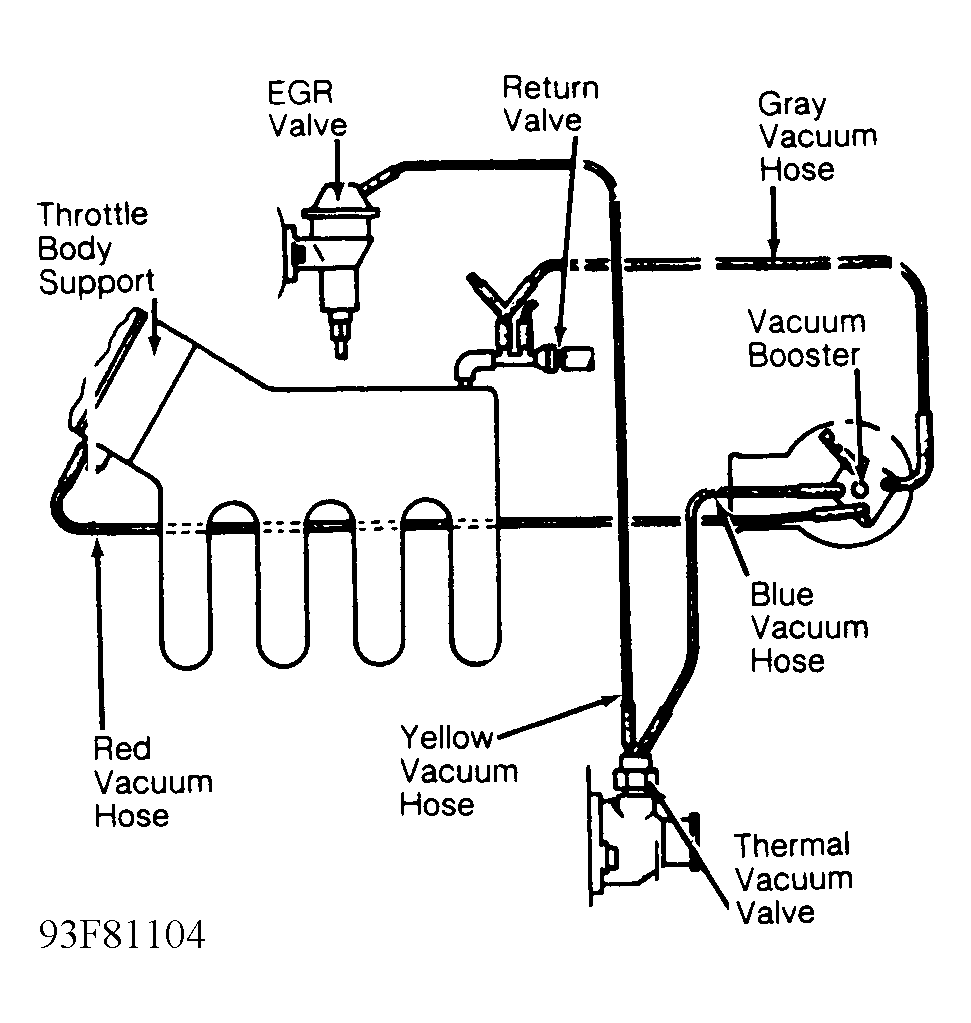 Courtesy of VOLKSWAGEN UNITED STATES, INC.