Battery Specific Gravity, Checking
Battery Specific Gravity, Checking
WARNING!
- Before working with electrolyte, refer to Warnings and Safety Measures
- Dispose of electrolyte (sulfuric acid) properly! Waste electrolyte must only be disposed of in appropriate waste disposal sites. Refer to local regulations pertaining to electrolyte disposal.
- The following notes and procedures must be followed to ensure correct measurements.
NOTE: In order to better determine a battery's overall condition, it is recommended to perform always the electrolyte specific gravity test in conjunction with the load test.
Special tools, testers and auxiliary items
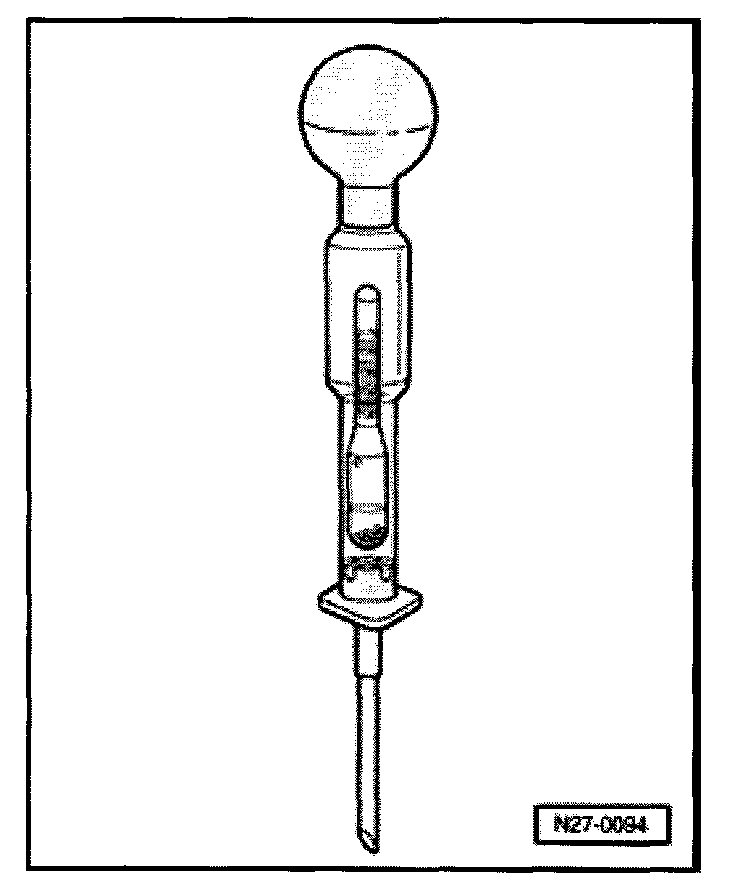
- Commercially available hydrometer
- Shop rags
NOTE:
- Minimum battery temperature of 10 °C (50 °F) is required when carrying out specific gravity tests.
- Test can be performed immediately after charging battery.
- Remove all battery cell caps.
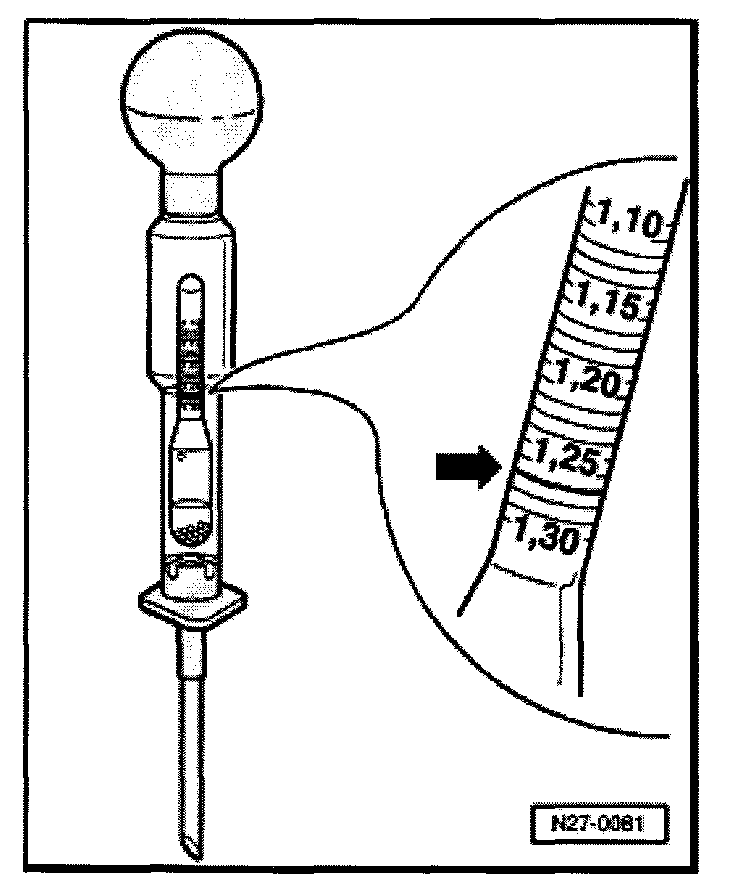
- Dip end of hydrometer into cell and extract sufficient electrolyte to allow indicator float to swim freely in the electrolyte. Make note of each cell's specific gravity reading from indicator float -arrow-. Repeat this sequence until all cells have been tested.
- The greater the electrolyte density (specific gravity) in kg/cubic dm, the higher the indicator float position.
- Review noted values and determine variations in specific gravity between cells (if any).
Variations in specific gravity between cells
NOTE:
- The maximum allowable variation range in specific gravity between cells must not be greater than 0.04 kg/cubic dm.
- Electrolyte density must be at least 1.24 kg/cubic dm.
Example of unacceptable variations in specific gravity:
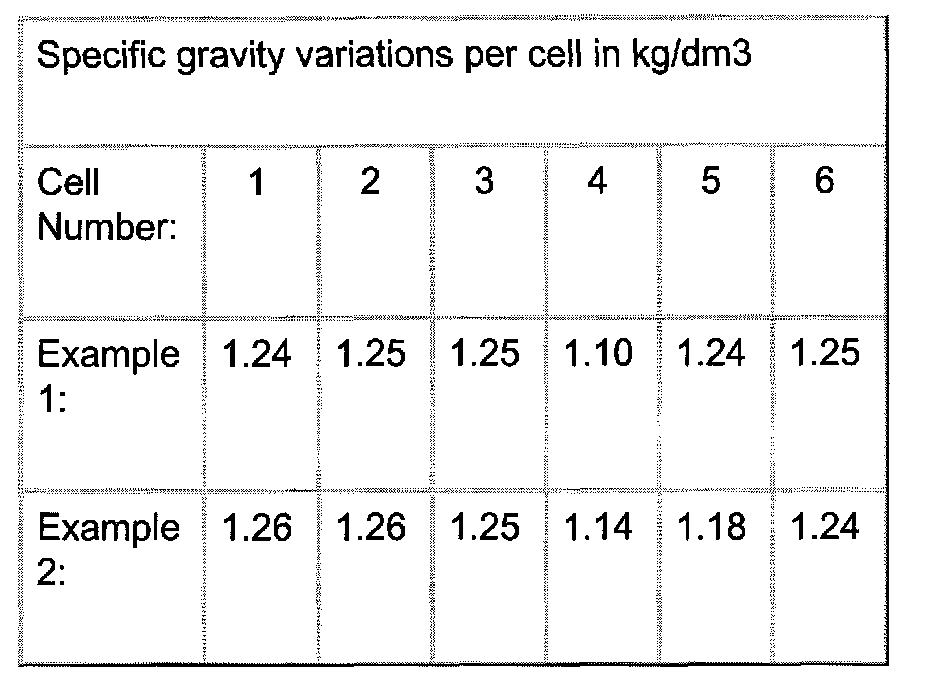
Variation range in specific gravity in Example 1, cell 4 (1.10), as well as Example 2, cell 4 (1.14) and cell 5 (1.18) are unacceptable.
Batteries shown in examples are no longer usable and must be discarded.
The following specific gravity values must be attained:
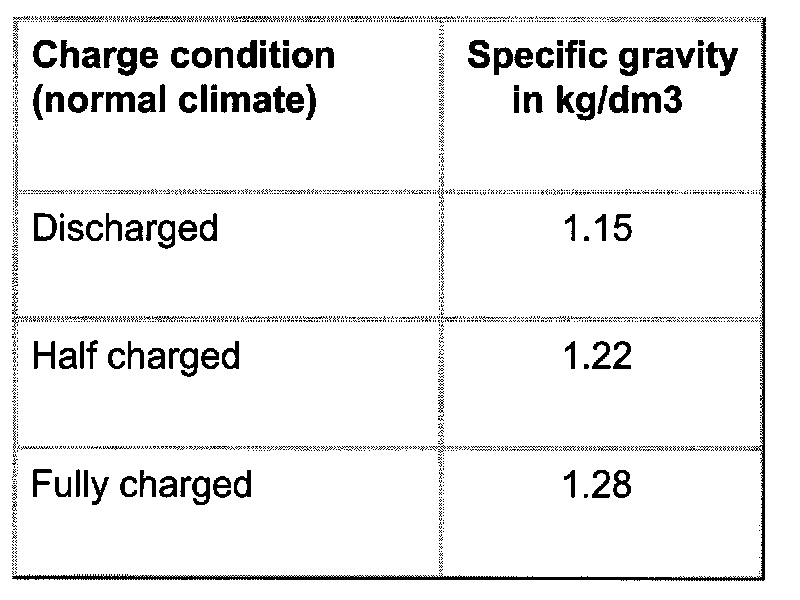
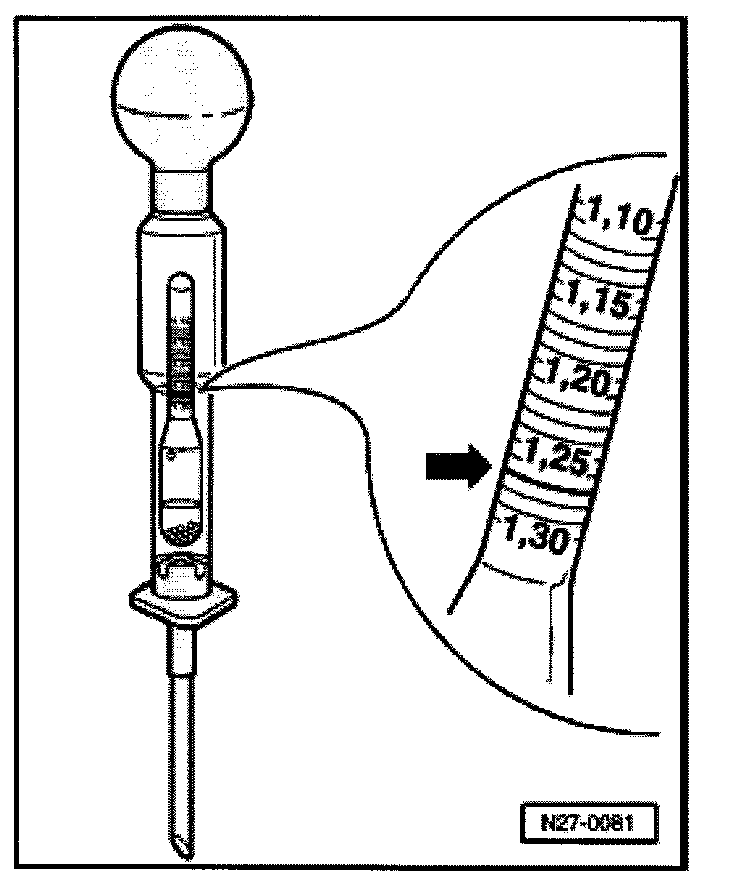
Example shows specific gravity reading of 1.27.
- If battery OK, reinstall all removed battery cell caps.
CAUTION!
- Only the use of genuine VW battery cell caps ensures the different battery cover systems are sealed correctly. Only use genuine cell caps of the same construction if lost or damaged. All cell caps must be equipped with an O-ring seal.
- A discharged battery MUST NOT be exposed to freezing temperatures; the battery will be damaged