Battery Electrolyte Level, Checking
Battery Electrolyte Level, Checking
WARNING!
- Ensure that genuine VW battery sealing plugs are used to ensure that the various battery cover systems are sealed correctly.
- Only use genuine VW sealing plugs of same construction if lost or damaged.
- Battery plugs must be equipped with an O-ring seal.
NOTE:
- Correct battery electrolyte level is an important factor in ensuring long battery life.
- Batteries with visible min. and max. markings require only a visual check of electrolyte level from the battery exterior.
- Electrolyte level must be above the minimum marking but not exceed the max. marking.
- Sealing plugs must be unscrewed on batteries if exterior min. and max. marking are difficult to recognize, or electrolyte level is not visible due to opaqueness of the battery housing. it is then possible to check electrolyte level by performing visual check of inner battery.
- Electrolyte level must align with internal electrolyte level marking (horizontal ridge). This equates to outer max. marking.
Electrolyte level too low
When electrolyte level is too low, cell plates project above the surface and there is a loss of battery capacity (loss of power). If cell plates are not covered by electrolyte (sulfuric acid) corrosion will occur on the plates, plate bridges and cell connector. The function of the battery can not be guaranteed if there is corrosion and the battery will become unusable.
- Only top-up with distilled water as this prevents electrolyte impurities which result in an increased self discharge.
Electrolyte level too high
Special tools, testers and auxiliary items
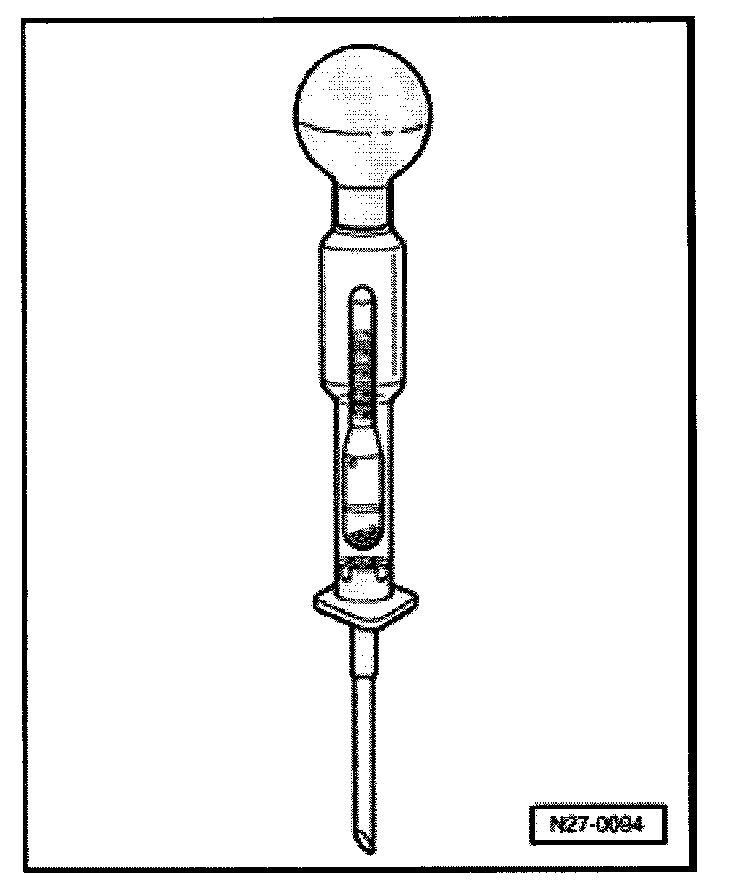
- Commercially available hydrometer
WARNING!
- Refer to Warnings and Safety Measures.
- If electrolyte level is too high, electrolyte (sulfuric acid/water mixture) may leak out and damage the surrounding area, i.e.: plenum and engine compartment.
- Excess electrolyte MUST be extracted using a hydrometer
- Dispose of electrolyte (sulfuric acid) properly! Waste electrolyte must only be disposed of in appropriate waste disposal sites. Refer to local regulations pertaining to electrolyte disposal.
- Remove cell caps from cells with excess electrolyte.
- Extract excess electrolyte using the hydrometer until the electrolyte level is lowered to the internal level indicator (lip) or the external maximum marking.